As India’s deeptech ecosystem expands into strategic sectors like defence and aerospace, women founders are navigating not only the inherent complexities of the industry but also the structural challenges that continue to shape leadership credibility and access to capital.
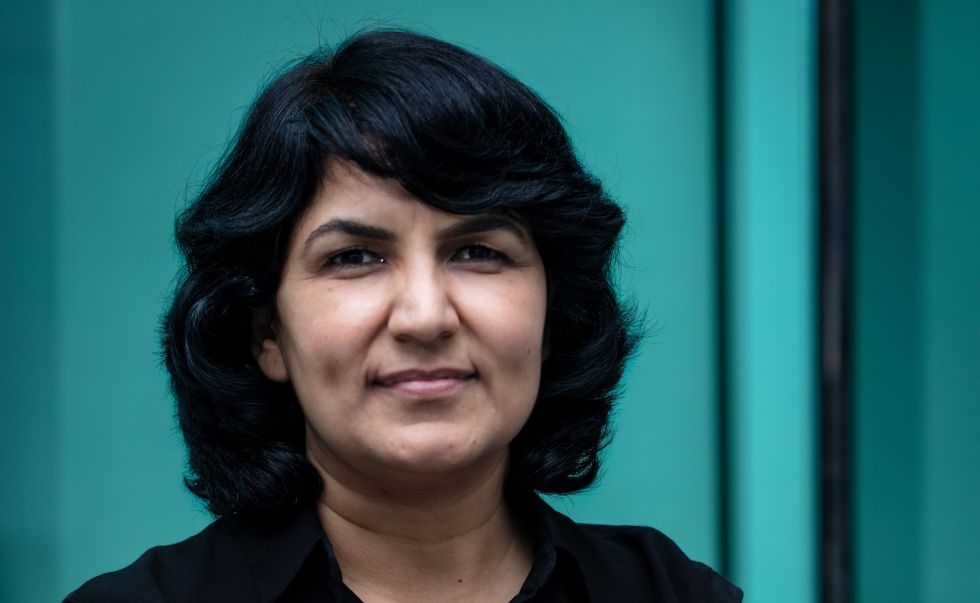
Building in deep tech and defence comes with its own structural hurdles, says Sarita Ahlawat, co-founder & MD, Vayudh.
“Long development cycles, regulatory complexity, capital intensity, and the need for rigorous testing standards are realities for any aerospace startup. From a leadership perspective, credibility in highly technical sectors must be continuously demonstrated. While women in STEM leadership sometimes face additional expectations, I approached this by focusing on technical depth, research validation, and measurable outcomes,” said Ahlawat in an interview for DealStreetAsia’s recent report titled Women Founders in India: Funding Review 2025.
She further noted that women founders in high-risk technology domains may sometimes face additional scrutiny around scale and execution capability.
“Women founders are often asked more detailed questions around risk management and operational resilience. I view this positively; it provides an opportunity to demonstrate technical depth and strategic clarity. We address these conversations through rigorous data, testing outcomes, deployment results, and technology validation. In defence technology, especially, performance metrics and reliability standards speak louder than narratives.”
Edited excerpts:-
What sparked your decision to start this venture, and how did you identify the gap in the market?
At BotLab Dynamics, the parent company of Vayudh (our defence vertical), we began as a research-driven organisation focused on solving complex challenges in autonomy, robotics, and unmanned systems. The original intent was not just to build drones as products, but to develop deep indigenous capabilities— flight control systems, swarm intelligence, communication protocols, and mission reliability.
As we progressed, we recognised a critical structural gap in India’s drone ecosystem. While India had strong engineering talent and growing demand, the country remained heavily dependent on imported drone hardware and components, particularly from China, including systems used in sensitive applications. This dependency raised concerns around supply-chain security, data integrity, and long-term technological sovereignty.
At the same time, India’s strategic priorities were evolving. With initiatives like Atmanirbhar Bharat, import restrictions on foreign drones, and increasing defence modernisation requirements, the need for homegrown aerial systems became urgent. We saw a clear opportunity to build indigenous technology that could support both civilian and national security needs.
This led to the creation of Vayudh, our defence vertical. The soul of Vayudh is “Made in India,” built on BotLab’s operational experience. Our expertise in coordinating thousands of drones, reliability, navigation, and autonomous control applies directly to defence-grade systems such as ISR platforms and nano drones.
To strengthen India’s self-reliance, we launched our drone components initiative through the BotLab Store to reduce dependency on foreign components and enable secure, indigenous systems. Vayudh emerged naturally, addressing a national need for technological independence in critical aerospace infrastructure.
In the early stages, what structural or personal challenges did you encounter, and how much of that do you attribute to gender versus general startup realities?
Building deeptech and defence technology comes with unique challenges, long development cycles, regulatory complexity, capital intensity, and the need for rigorous testing standards. These are structural realities for any aerospace startup.
From a leadership perspective, credibility in highly technical sectors must be continuously demonstrated. While women in STEM leadership sometimes face additional expectations, I approached this by focusing on technical depth, research validation, and measurable outcomes.
The defence and aerospace sectors value precision and performance above all else. Over time, demonstrated capability builds trust. The experience strengthened my belief that consistent execution and technical excellence remain the most powerful drivers of acceptance.
Can you walk us through your fundraising journey—from your first pitch to closing the round? What shifted the outcome in your favour?
Our fundraising journey evolved alongside our technology maturity. Initially, the challenge was communicating the value of deep R&D and long-term technology development, particularly in a market that often prioritises quick scalability.
The turning point came when investors recognised the dual-use potential of our technology. Our experience in autonomous drone swarms, large-scale coordination, and indigenous hardware development demonstrated applications far beyond entertainment, particularly in defence and strategic sectors.
With Vayudh, we presented a clear vision: indigenous ISR platforms, nano drones for tactical deployment, and advanced UAV simulation systems like VAYUSIM. The strategic relevance of building sovereign drone capabilities aligned strongly with national priorities, which significantly strengthened investor confidence. Last year, we secured $10 million in funding led by Dharana Capital. And the technology validation, operational experience, and clear alignment with India’s defence road map shifted the outcome in our favour.
Do you think having male co-founders made a difference in your fundraising journey?
Our founding team brings complementary expertise across research, engineering, and strategic execution. Investors ultimately evaluate capability, market relevance, and execution strength. Our shared vision of building indigenous drone technology and our technical foundation were the defining factors. The conversation has always been about the impact of our technology and its relevance to national capability building.
In today’s tighter funding environment, do you think female founders face distinct challenges?
In capital-intensive sectors like aerospace and defence, access to patient capital is critical for all founders. However, women founders in high-risk technology domains may sometimes face additional scrutiny around scale and execution capability.
That said, the ecosystem is gradually becoming more merit-driven. As India’s deeptech ecosystem matures, demonstrable innovation, technical capability, and national relevance are increasingly becoming the primary evaluation criteria.
Have you noticed differences in the types of questions or risk perceptions investors bring to female founders? How did you navigate those dynamics?
Women founders are often asked more detailed questions around risk management and operational resilience. I view this positively; it provides an opportunity to demonstrate technical depth and strategic clarity. We address these conversations through rigorous data, testing outcomes, deployment results, and technology validation. In defence technology especially, performance metrics and reliability standards speak louder than narratives.
Can you share a moment where bias—subtle or overt—showed up in your journey? Have you ever felt you had to over-prepare compared to male peers?
In mission-critical industries, over-preparation is simply a requirement. Technical clarity and precision are essential regardless of context. I have always believed that strong preparation, research-backed decision-making, and consistent performance build long-term credibility. Over time, results redefine perception.
From your perspective, how has the ecosystem evolved for women founders over the past five years? Where has real progress happened, and where does the gap remain?
The ecosystem has evolved significantly. There is greater visibility, stronger mentorship networks, and more institutional support for women in technology and entrepreneurship. More women are now leading ventures in robotics, aerospace, and deep tech—sectors traditionally dominated by men. However, representation in capital allocation and deeptech investment decision-making still needs improvement.
Looking back, what fundraising or strategic decisions would you approach differently today?
With hindsight, I would have accelerated our defence initiatives earlier. India’s demand for indigenous drone technology has grown rapidly, and earlier investment in defence manufacturing infrastructure and testing capabilities could have accelerated scale. However, our strong R&D foundation ultimately allowed us to build Vayudh with technological maturity and operational confidence.
How would you describe your leadership style, and has your experience shaped it differently from traditional founder archetypes?
My leadership approach is research-driven, collaborative, and mission-oriented. Scientific training emphasises experimentation, data-driven decision-making, and continuous learning. Unlike traditional founder archetypes that often emphasise speed and rapid scaling above all else, I place significant emphasis on empowering teams with ownership and intellectual freedom while maintaining clarity of purpose. At the same time, I believe in structured execution, clear systems, measurable outcomes, and accountability. This balance between innovation and discipline is essential when developing mission-critical technologies.
How do you envision your company evolving over the next 5-10 years?
Over the next decade, Vayudh will be central to our growth and technological direction. We see our evolution happening across multiple dimensions that align with India’s emergence as a global aerospace and defence innovation hub. First, we aim to develop advanced autonomous drone platforms for defence applications. Our focus is on building highly reliable platforms that operate effectively in complex environments.
Second, scaling indigenous manufacturing capabilities will be a key priority. Developing local production capacity for critical drone components and systems will strengthen technological independence and create a sustainable domestic ecosystem.
Third, we will continue advancing swarm intelligence and AI-enabled UAV systems. Fourth, we plan to expand simulation and training infrastructure. Realistic simulation environments and advanced pilot training ecosystems are essential for defence readiness and operational efficiency. Ultimately, our vision is to position India as a global hub for autonomous aerial systems, robotics, and aerospace innovation, where indigenous technology drives both national capability and global competitiveness.
Funding for women-led startups remains disproportionately low. What structural changes would actually move the needle?
Addressing this challenge requires structural transformation rather than incremental change. One of the most impactful shifts would be greater representation of women in investment leadership roles, as decision-making diversity directly influences funding outcomes and evaluation frameworks.
Another key requirement is stronger support for deeptech and research-driven ventures. Many women founders operate in sectors like robotics, aerospace, and advanced engineering, where innovation cycles are longer and capital requirements are higher. Increasing long-term funding pools for research-intensive ventures would significantly improve access.
Strengthening industry-academia collaboration is also essential. Universities and research institutions can play a critical role in enabling women entrepreneurs by providing technical infrastructure, mentorship, and commercialisation pathways. Ultimately, innovation thrives when access to capital aligns with capability. Creating equitable systems benefits not just women founders but the overall innovation ecosystem.
How can male allies in VC and entrepreneurship better support women founders?
Male allies can create meaningful impact by ensuring equitable evaluation frameworks that focus on capability, performance, and technological merit rather than perception-based biases. Objective assessment allows innovation to be judged on its true potential. Beyond funding decisions, mentorship and access to professional networks play a crucial role.
Many opportunities in entrepreneurship emerge through informal connections, and inclusive networking environments can significantly expand access. Active sponsorship, advocating for women founders in investment discussions, leadership opportunities, and industry forums, also help create systemic change. Meaningful allyship is not only about support but about ensuring equal opportunity and visibility.
How important are women-led angel networks and VC funds in closing the gap?
Women-led angel networks and VC funds play a meaningful role in reducing funding disparities across industries. Their contribution goes beyond financial backing by improving opportunity, representation, and access within the entrepreneurial landscape. They help widen entry points to investment by supporting founders who may not traditionally be part of established funding circles. By expanding outreach and engagement, these platforms encourage a broader range of ideas, business models, and leadership voices across sectors.
They also introduce more diverse perspectives in evaluating ventures. Another important contribution is ecosystem support. These groups often provide mentorship, industry connections, strategic guidance, and peer communities that help founders strengthen leadership capabilities, navigate challenges, and scale sustainably. Their value lies not only in supporting women founders, but in creating a more equitable, dynamic, and representative business ecosystem overall.
In many industries, women remain underrepresented in leadership roles. For women building in India today, what’s your advice?
My advice is to focus on building strong domain expertise, clarity of vision, and long-term resilience, regardless of the industry. First, invest in continuous learning and skill development. Industries evolve rapidly, and staying adaptable keeps you relevant. Understanding your field deeply, along with business fundamentals like finance, communication, and strategy, builds confidence and authority.
Second, build strong professional networks and seek mentorship. Growth accelerates when you are surrounded by people who challenge, guide, and support you. Collaboration and community open opportunities.
Third, develop the confidence to take ownership of your ideas and decisions. Equally important is resilience. Setbacks are inevitable, but consistency, expertise, and long-term focus help overcome barriers.