Viewpoint: How India’s IPO-ready companies are being built

Viewpoint: How India’s IPO-ready companies are being built

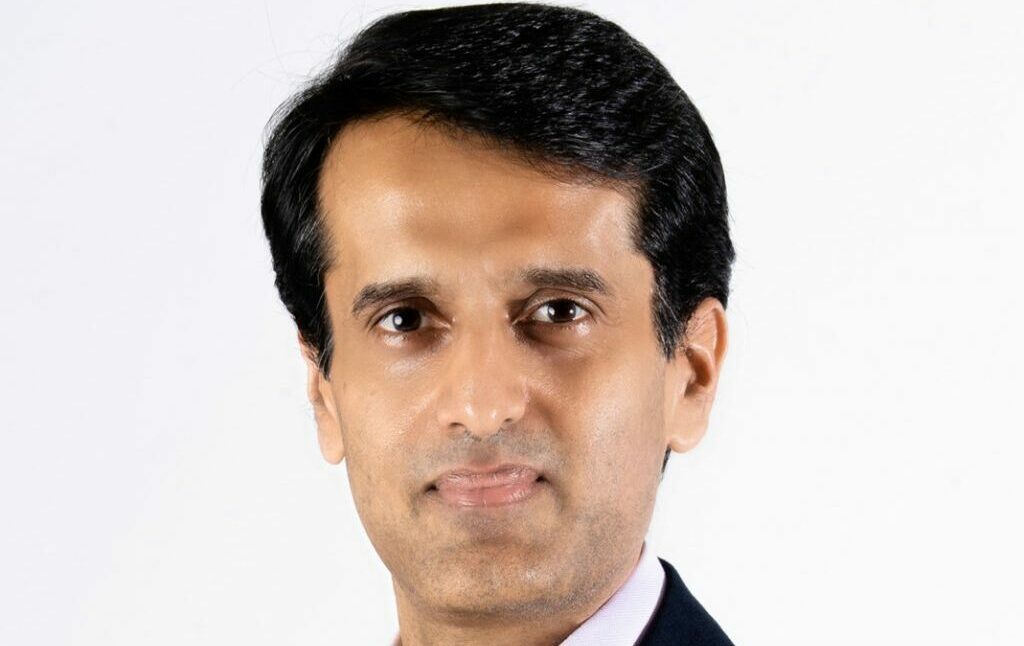
Kabir Narang is a leading global tech investor over the last two decades.

The author, Kabir Narang, is the founding partner of two global investment firms

Through much of my 20-year global investing journey—from New York and Silicon Valley to Hong Kong and the Middle East—a familiar doubt surfaced repeatedly: was India capable of producing exits at scale?

The answer is changing faster than at any point in the last decade. India is entering a structurally different liquidity cycle—one driven not by loose capital or momentum, but by unit economics, profitability and disclosure-readiness.

India’s IPO market in 2025 is on track to raise around $20 billion, with bankers expecting one of its largest ever waves of billion‑dollar listings, potentially rivalling or surpassing previous peak years.

Regulatory refinements around equity sell‑downs, together with rising domestic savings and a stronger mutual‑fund bid, have created the most receptive primary market environment since the 2017–21 cycle. The key change this time is that public investors are placing a clear premium on profitability, governance and capital discipline rather than simply rewarding headline growth.

The proof points are here

Meesho’s December debut—popping roughly 46-58% on listing day—offered the clearest recent signal: public investors are paying premiums for mass-affordable models with strong contribution margins and disciplined growth. It was not GMV that the market priced—it was efficiency.

Several other companies I have worked closely with over the last few years illustrate the broader spectrum of liquidity paths opening up. Individually, these are success stories. Collectively, as the photographer in me would say, they form a pattern: India’s next liquidity window is broad, diverse and anchored in real economics.

India’s next liquidity window is broad, diverse and anchored in real economics

Why this cycle is different from 2017–21

The last major tech IPO cycle was born in a ZIRP world. ZIRP—Zero Interest Rate Policy—is what happens when interest rates fall so low that holding money feels almost silly. Capital behaves the way Feynman described energy in a system: if you lower the barriers, the energy rushes everywhere.

With near-free money, investors chased anything that moved. Scale became the currency. Cash burn was tolerated. Growth was rewarded simply because capital had nowhere else productive to go.

The current cycle operates under a different set of rules. Investors are now underwriting profitability or near-profitability, stable cohorts with low promo dependence, clean unit economics, quality of revenue over GMV optics, and disciplined disclosure with tight working-capital control.

Investors are now underwriting profitability or near-profitability.

Companies are being evaluated in the way global public markets have always judged durable businesses. The bar is higher—but the roadmap is far clearer.

A simple framework for ‘IPO-readiness’ in India in 2025–2027

After seeing dozens of companies approach liquidity—some successfully, others not—here is how I define whether a company is truly ready:

  1. Profit discipline: Contribution margins must be positive, with EBITDA breakeven either achieved or credibly within sight.  Public markets no longer subsidise experimentation. 
  2. Clean cohorts and mix: Recurring users, low dependence on promotions, and a shift toward higher-margin SKUs or segments. Choppy cohorts or heavy subsidy curves are deal-breakers. 
  3. Cash visibility: Working capital under control, CAC and paybacks inside 12–18 months, and predictable logistics/fulfilment costs. If the business model eats cash every quarter, the IPO market will not. 
  4. Listing and sell-down strategy: Anchor book clarity, OFS/max-float planning, and a two-year block-trade roadmap. The market wants well-orchestrated liquidity, not opportunistic exits.

This is the playbook institutional investors are applying—across the internet, healthcare, SaaS, fintech and consumer businesses.

IPO readiness across business models: What one is seeing

Mass-affordable internet: Public markets continue to favour predictable, low-AOV, asset-light models where growth does not depend on sustained burn. Meesho’s IPO is the clearest recent signal: investors rewarded a marketplace with disciplined contribution margins, stable cohorts, and a clear path to expanding monetisation rather than GMV for its own sake. The listing reopens the door for the next generation of mass-market commerce and classifieds platforms built on efficiency rather than subsidies.

Enterprise SaaS: The main determinants of IPO readiness in SaaS remain renewal quality and multi-year operating leverage. Public investors are focusing on growth, scale, net revenue retention, gross margin expansion and the ability of AI-driven features to lift productivity rather than inflate costs. Clean ARR pipelines with visibility into the next 12–18 months matter more than short-term top-line acceleration. This is consistent with how global SaaS IPOs have been evaluated over the last 18 months.

Healthcare, fintech and regulated adjacencies: In tightly regulated sectors, IPO readiness hinges on compliance certainty, transparent unit economics, and predictable cash cycles. Investors now evaluate these companies with the same lens they apply to financial institutions: regulatory adherence, provisioning discipline, margin stability, and visibility on collections matter more than user growth. The market has shown a preference for businesses with clear governance structures and controlled risk frameworks, which aligns with global public-market standards post-2021

Many of the technology IPOs we are seeing today are a testament to the quality of management and professionalism defining new India.

It is worth noting what makes this moment structurally different. Many of the technology IPOs we are seeing today are a testament to the quality of management and professionalism defining the new India. They are professionally run institutions that have attracted India’s best talent to build highly moated businesses obsessed with customer satisfaction and operational excellence.

This is the first true IPO window for venture-backed Indian companies at scale. For years, these businesses were criticised for burning cash or being inefficient. Yet a meaningful cohort has now become dominant in their segments, with deep moats in supply chain, data, distribution, or network effects. Their listing readiness is not a function of abundant liquidity; it is the result of maturing business models and disciplined execution.

So where are we in the cycle?

India is at the early stages of what is shaping up to be its most credible liquidity window since 2017–2021—this time anchored in materially stronger fundamentals. Domestic capital participation is deeper and more consistent. Mutual funds have become structural, long-only buyers. Global institutions have greater confidence in regulatory clarity and governance. And, most importantly, founders are building with sharper discipline around growth, cash flows, and unit economics.

For years, the question was whether India could produce exits at scale. That question is now being answered. Exits are materialising not because liquidity is abundant, but because the underlying businesses are stronger, cleaner, and more predictable. Capital today is selective and unforgiving—companies that pair credible growth with profitability discipline will be rewarded. Those that consistently under-promise and over-deliver will earn valuation premiums and investor patience.

As I often say—a principle I hold closely, even if my math training risks spoiling a beautiful line—markets, like life, follow a simple equation: satisfaction equals reality minus expectations. In this IPO cycle and beyond, the companies that internalise that equation will be the ones that endure.

Bring stories like this into your inbox every day.

Sign up for our newsletter - The Daily Brief
Subscribe to Newsletter


This is your last free story for the month. Register to continue reading our content