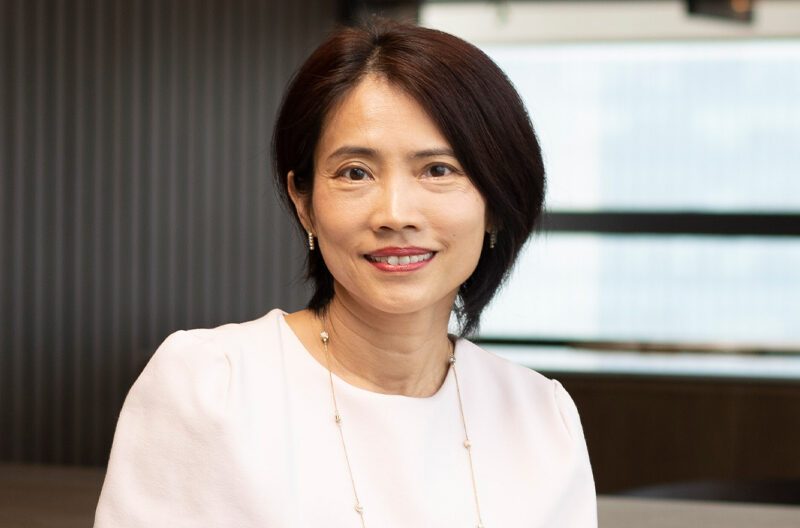
The author, Helen Wong, is Managing Partner at ACV Capital and a seasoned venture capitalist with over two decades of experience spanning Silicon Valley, China, and Southeast Asia.
With falling interest rates, a weakening dollar, active IPO markets in Hong Kong and India, and stabilising private markets across Southeast Asia, 2025 offered several reasons for cautious optimism. That said, the year began with significant volatility.
In China, the DeepSeek moment ignited much excitement, but also gave rise to anxiety in the US that Washington’s blocking of GPU chips forced Beijing to innovate.
Although most Chinese are proud of their ability to compete in AI, especially with their open source models, concerns persist that the US is absorbing the majority of global AI capital, creating existential risks for smaller players competing against model-to-application giants such as OpenAI and Anthropic. There was also a quip that while China’s internet giants claim to be “all in on AI”, they have ended up “all in on meal delivery”, as Meituan, JD.com, and Alibaba engage in costly subsidy wars to win customers.
AI captured roughly half of all global venture funding in 2025.
AI captured roughly half of all global venture funding in 2025. Capital was highly concentrated: Around ten companies raised nearly 80% of total AI funding, much of it through mega-rounds exceeding $500 million.
While excitement around agentic AI and ‘vibe coding’ grew, investing in AI startups in Southeast Asia remains challenging. The exit of Manus, a Chinese-founded, Singapore-headquartered AI startup, at $2b to Meta at the end of 2025, has given VCs some hope. But on the whole, top founders continue to gravitate toward the US market, and valuations have often outpaced revenue growth.
Corporate governance crisis
At DealStreetAsia’s Indonesia PE-VC Summit in Jakarta in January 2025, everyone was talking about the eFishery scandal that rocked the venture capital industry. While we were not investors in the company, we received questions from LPs about corporate governance in Indonesia. Similar incidents have occurred elsewhere—China’s venture ecosystem has seen its own high-profile cases, such as that of Luckin Coffee.
Corporate governance challenges are not unique to Indonesia or Southeast Asia, but they underscore the higher level of diligence required in emerging markets. Founders may not always be accustomed to venture capital norms and may act in short-sighted ways.
Corporate governance challenges underscore the higher level of diligence required in emerging markets.
A basic starting point is to avoid management teams with reputational risks. The best way to assess this is through comprehensive reference checks—not only with references provided by founders.
Additional safeguards include strong whistleblower policies that allow anyone to present evidence of wrongdoing, and on-site due diligence. Hedge funds, for example, famously visit factories and distribute free tea to workers to verify headcount claims. Lastly, there is the golden rule: if something seems too good to be true, it often is.
Adjusting to US tariffs
‘Liberation Day’ marked an initial moment of shock, though its longer-term impact proved more manageable than initially feared.
Most Southeast Asian countries have since adjusted to a new reality of roughly 20% US tariffs. While supply chain reconfigurations are still underway, uncertainty has eased, and we are hopeful this will accelerate ‘China plus one’ manufacturing shifts into the region.
Indonesia’s decision to join BRICS in January, followed by progress toward a Comprehensive Economic Partnership Agreement (CEPA) with Europe in September, reflects a pragmatic diversification of alliances—potentially a silver lining amid ongoing US trade tensions.
India, by contrast, appears to be facing higher tariff-related pressure.
Hong Kong’s IPO rush
On the IPO front, Hong Kong emerged as the world’s leading IPO market in 2025, providing much-needed liquidity for venture investors.
One of the most exciting listings was Moore Threads, a GPU chipmaker whose market capitalisation reached approximately $40 billion. Founded just five years ago, the company generated roughly $100 million in revenue in the first half of 2025. Its investors are clearly hoping it will learn from Nvidia’s success.
In April, we welcomed positive news when one of our portfolio companies, Fore Coffee, went public on the Indonesian Stock Exchange (IDX). Fore is a leading mid-range coffee chain in Indonesia. The growth of coffee chains since Luckin Coffee’s rise in 2017 has been remarkable, with each Southeast Asian country developing its own local champions. Even Starbucks China made headlines this year by selling its business to a private equity firm, signalling a broader wave of Western brands exiting China.
Having invested in China’s consumer sector for many years before returning to Singapore, I found it particularly encouraging to see a revival of consumer IPOs—a segment sidelined in recent years amid geopolitical tensions and a pivot toward deep tech.
In Q2, Mixue and Laopu Gold went public, joining Pop Mart (wasn’t Labubu everywhere?) to form the so-called ‘Three Sisters’ of the Hong Kong stock market—three consumer companies each with market capitalisations exceeding H$100 billion (approximately $15 billion).
Mixue’s IPO, which delivered post-listing gains of 50%, stood in sharp contrast to Chagee’s weaker performance following its US listing in April.

Combined with the ongoing uncertainty facing Chinese companies listed in the US, this divergence may further strengthen Hong Kong’s appeal. There are now more than 300 IPO applications in the pipeline. Encouragingly, Southeast Asian companies such as IFBH and Mirxes have also successfully listed, and we hope to see more regional exits via public markets.
While the Magnificent Seven performed well, they did not top the S&P 500’s best-performing stocks. Robinhood, by contrast, reached a $100 billion market capitalisation, driven by strong equity and crypto trading volumes.
In India, a comparable company called Groww completed a successful IPO, reaching a $9 billion valuation.
In Indonesia, our portfolio company Stockbit—a leading online brokerage—performed strongly alongside robust domestic trading activity and a surge in retail investors to over 19 million. The Jakarta Composite Index reached record highs above 8,700 points in early December, trailing only Singapore and Vietnam in regional performance.
Climate risks
Climate risks were again front and centre, with super typhoons in the Philippines and severe flooding across Sumatra, Indonesia, and other parts of Southeast Asia. The floods in Indonesia were described as the worst in three decades, while southern Thailand experienced its most severe flooding in three centuries.
These events disrupted agricultural supply chains in coffee, palm oil, and pulp and paper, reinforcing the urgency of climate adaptation and resilience.
Yet climate tech investing remains a niche, at ±16% of overall funding in the first half of 2025 in terms of deal value, according to DealstreetAsia.
Global momentum softened amid Trump’s anti-climate rhetoric and regulatory delays, including another postponement of the EU Deforestation Regulation.
Funding from Development Finance Institutions (DFIs) has also fallen, as Europe reallocates budgets toward defence and the US cuts foreign aid. At ACV Capital, we are most grateful for the Australia Development Investment’s support in funding, managed by Sarona Asset Management, and hope that Indonesia’s partnership with Australia continues to deepen.
In SE Asia, energy security has taken precedence, with data centres driving demand for power and water.
In Southeast Asia, energy security has taken precedence, with data centres driving rising demand for power and water. We hope a meaningful portion of this demand will be met by renewables.
In electric mobility, Indonesia’s withdrawal of subsidies for two-wheeler EVs created headwinds, though overall electric mobility continued to gain momentum. Rent-to-own models gained traction among ride-hailing drivers, while Chinese EV brands—led by BYD—continued to take market share from Japanese ICE incumbents in the four-wheeler segment.
Vietnam’s VinFast also stepped up its investment, committing $1 billion to expand manufacturing in Indonesia, a timely move as the country plans to end tax incentives for fully imported cars starting in 2026.
The defining theme of 2025 for Southeast Asia’s startup ecosystem has been stabilisation. Across our portfolio, companies improved financial performance—either through topline growth, cost reductions, or both—with some reaching profitability or becoming cash-flow positive.
Our quick-commerce investment, Astro, raised over $50 million in a round led by Amazon, reflecting sustained consumer demand for fast online delivery. At the firm level, we increased our focus on growth equity, where we see compelling opportunities in profitable, cash-generative businesses. This shift reflects a maturing tech ecosystem, even as long-term drivers such as urbanisation and consumer growth remain intact.
Despite a year marked by tariffs, climate shocks, and geopolitical tensions, the resilience of Southeast Asian economies—GDP growth of approximately 4.5% and inflation around 2%—has been encouraging. As we end the year, the 2025 United Nations World Urbanisation Prospects report threw the spotlight on Indonesia with the claim that Jakarta is now the largest city in the world in terms of population, underlining the narrative that the centre of population growth has moved to Asia.
While private equity and venture capital markets in the region may be overlooked in favour of larger Asian neighbours, the stabilisation of startups and the IPO/ large funding rounds like Fore and Astro’s remind us that opportunity exists everywhere. As we enter 2026, we remain hopeful that the investment environment will continue to improve.