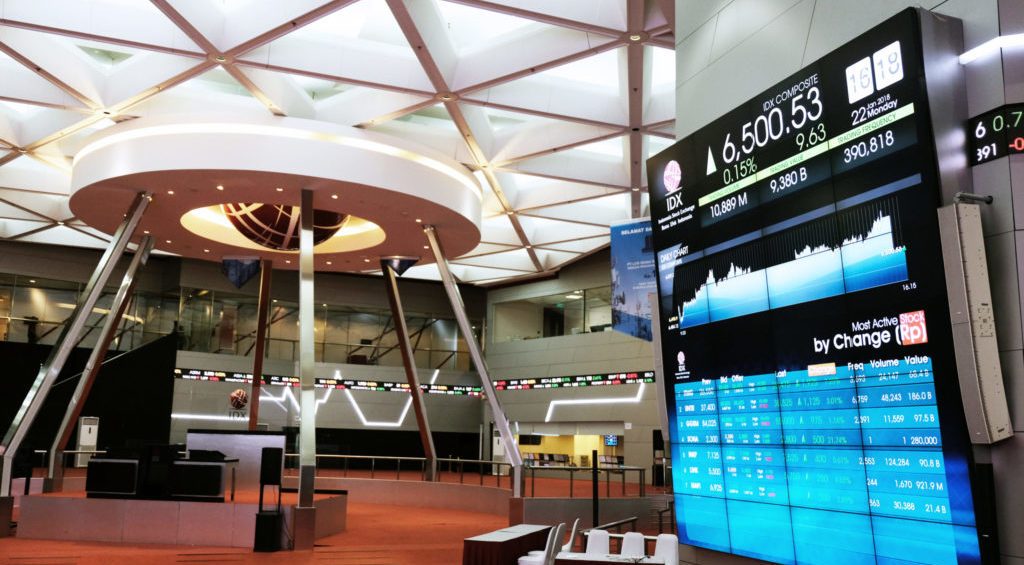
Index provider MSCI on Wednesday said it had concerns about ownership and trading transparency in Indonesia, and the market risked a downgrade to frontier status if it failed to resolve the issues, triggering a sharp fall for the country’s stocks.
MSCI, which designs market indexes that are tracked by billions of dollars in global investment, said that as of Wednesday it had immediately frozen updates to Indonesian securities in its products to mitigate what it called “investability risks.”
The benchmark Jakarta Composite Index slumped as much as 8.8% on Wednesday after the MSCI announcement, triggering a 30-minute trading halt at around 0648 GMT. When trading resumed, some losses were regained and stocks closed down 7.4%, the steepest decline in nine months.
MSCI also flagged investor “concerns about possible coordinated trading behaviour that undermines proper price formation”. In the meantime, MSCI said it would not make any Indonesia-related changes to its indexes.
The Indonesian government is expected to hold a meeting soon regarding the MSCI matter, senior economic minister Airlangga Hartarto said on Wednesday, adding that Jakarta is monitoring the stock movement.
Indonesia Stock Exchange (IDX), the Securities Depository and Settlement Institution (KSEI) and financial regulator OJK were discussing the matter with MSCI, IDX told reporters earlier on Wednesday.
“Previously, we have increased transparency by publishing free float data announcements on the IDX website,” said IDX Corporate Secretary Kautsar Primadi Nurahmad adding they will continue the discussion if MSCI still feels not sufficient.
KSEI and OJK did not respond to requests for comment.
MSCI‘s indexes serve as share price-performance benchmarks.
The New York-headquartered company said that, with regards to Indonesia, it will immediately halt any additions to its indexes and freeze increases to its estimates on the number of shares available for purchase by international investors to “mitigate index turnover and investability risks”.
“We believe this could put Indonesia under negative sentiment if MSCI decides to reduce Indonesia’s weighting in the MSCI Emerging Markets (EM) index,” said William Simadiputra, head of research Indonesia at Singaporean lender DBS.
“However, we think the downside risk will likely be limited due to persistent foreign outflows since 2025.”
The major Southeast Asian equity market is already plagued by foreign outflows amid a weak currency and concern over a widening fiscal deficit and central bank autonomy.
Overseas investors sold 13.96 trillion rupiah ($834 million) worth of shares in 2025, the worst year of outflow since 2020, with the sell-off continuing in January, LSEG data showed.
Still, Indonesia’s benchmark stock price index surged more than 20% in 2025 and set records several times during the year, making it one of the region’s top-performing markets.
Reuters