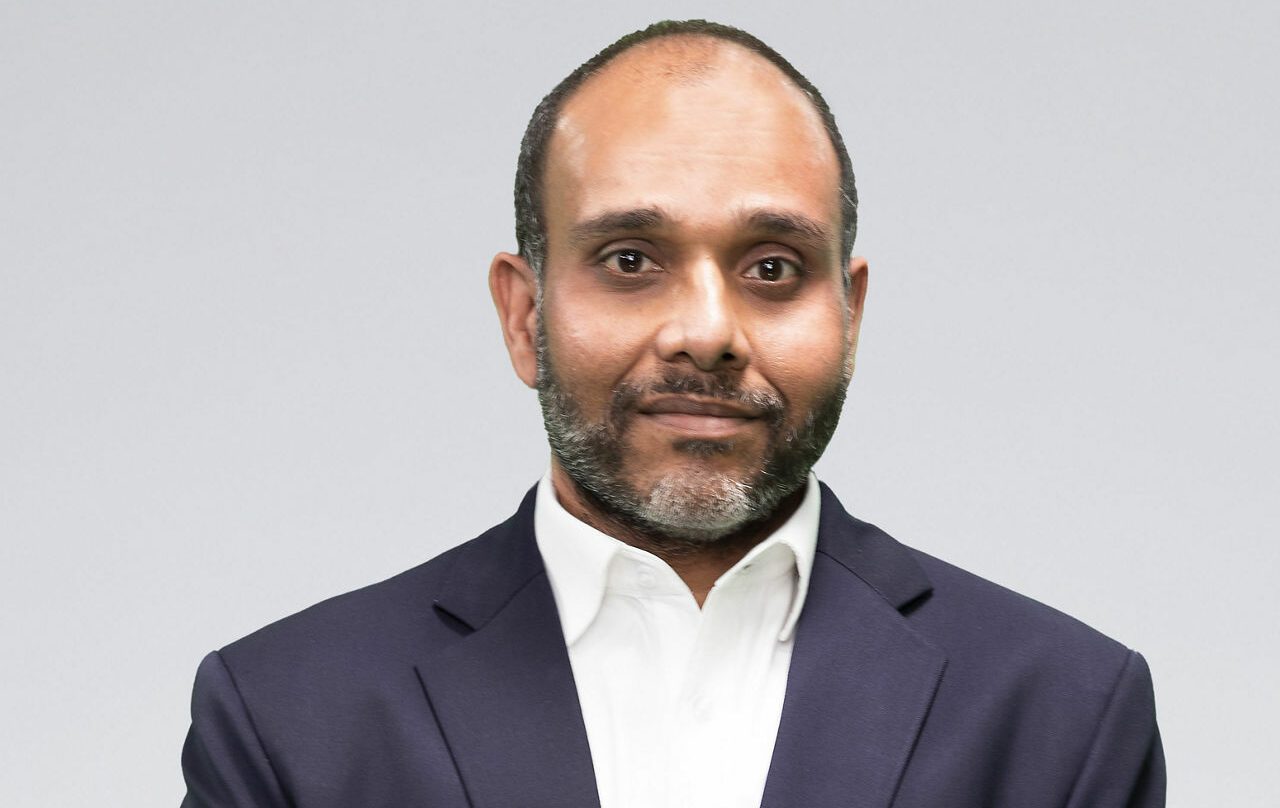
The author, Nishesh Dalal, is Partner and Private Equity Leader, Deloitte South Asia
The year 2025 marked a pivotal shift in India’s private equity (PE) landscape. It was characterised by a cautious yet optimistic rebound in investment activity, realignments fuelled by sustainable and scalable sectors and institutional maturity that reflected the evolution of the private market.
It was a year when economic fundamentals were robust, policy support was strong, the shift in favour of sectors with enduring value creation potential was strategic, and global investors reaffirmed their commitment to India with increased on-ground presence.
In 2025, pure-play PE investments have demonstrated an uptick compared to the year prior. Domestic consumption and defensive sectors, such as financial services (mainly NBFCs), life sciences and healthcare, and information technology & enabled services, accounted for almost half of the deals by value, followed by nation-building sectors, including infrastructure and real estate.
Controlling the steering wheel
Buyout deals in India have grown fourfold since 2010, a clear signal that control is becoming the dominant strategy and in 2025, buyouts have been significant. This shift is more than a numbers game. It reflects investors’ increasing focus on driving value creation, overseeing financial activities, and reducing the risks of fraud or mismanagement amid macroeconomic uncertainties.
Buyout deals in India have grown fourfold since 2010.
Deal-makers are pursuing scale deals with sophisticated deal structures, aiming for acquisitions that consolidate market positions and achieve cost and revenue synergies. They prefer buyout/control deals to actively manage portfolio companies, implement improvements, and drive strategic growth to offer stability.
Control deals also provide PEs with a structured framework and greater certainty around the timing, terms, and conditions of their exit, often with “drag along” rights. This helps them plan their exit strategies more effectively and manage risks associated with valuation and market conditions.
There is an increasing trend of a new generation of entrepreneurs who are open to external investment, often driven by succession issues and the need for professional expertise. There is also a surge in Limited Partners (LPs) co-investing with PE firms, enabling risk-sharing on large deals.
There is a surge in LPs co-investing with PE firms, enabling risk-sharing on large deals
This strategy encourages PE firms to pursue bigger, more complex investments that may have been avoided earlier due to capital or risk concerns.
India’s stable Gross Domestic Product (GDP) growth and controlled inflation have created a favourable macroeconomic environment, encouraging PE firms to pursue control deals for long-term value. Continuous reforms in regulations, including the Companies Act, SEBI regulations and Foreign Direct Investment (FDI) policies, coupled with a marked decline in red tapeism, have simplified investment approvals.
Enhanced governance and stringent reporting standards have boosted investors’ confidence in taking up controlling stakes. Large-scale infrastructure assets (e.g. telecom towers), tech platforms and Financial Services (FS) firms offer attractive platforms for consolidation and expansion through control investments.
Active operational involvement
PE firms are increasingly backing platform plays, acquiring a strong core company and building around it through strategic add-ons. The goal is to enhance market share, capabilities and reach.
This model requires deeper operational involvement, tech upgrades and tighter governance, supported by more specialised operating teams.
PE firms are increasingly backing platform plays
PE firms are now more inclined to form operating teams. The focus is on sector depth, active risk management, and sustainable value creation, rather than merely capital structuring.
About half of India’s leading PE funds now employ dedicated internal operating teams. These teams include full-time professionals and industry veterans. Others use experts on retainer or external consultants. The trend is clear. Active operational involvement is central to the new model.
Broadening of the exit playbook
Exit momentum is on the rise in 2025, with exits being higher than in 2024. For “new-age” digital businesses focused on profitability and scale, IPOs have been the headline exit route in 2025, enabling sizable liquidity events for early PE/VC backers. Secondary transactions, GP-led restructurings and strategic trade sales have also become important complementary pathways.
PEs are broadening the playbook to secure liquidity and maximise value in parallel. Trade sales and secondary PE sales in India have increased due to a combination of market maturity, liquidity pressures, and changing investor needs.
Trade sales and secondary PE sales in India have increased due to market maturity, liquidity pressures, and changing investor needs.
As India’s PE markets have matured, more funds are reaching the end of their typical cycles, prompting early investors and funds to seek alternative exit avenues. Late-stage funding has become increasingly scarce, and many companies are now prioritising profitability over growth. This shift has delayed expected exit timelines for investors, increasing the need for solutions that provide fast liquidity.
Regulatory changes, including stricter timelines for fund liquidations and closures set by SEBI, have nudged funds to pursue secondary transactions to comply and provide liquidity to LPs.
Moreover, the recent boom in public markets and expectation of lucrative IPOs motivate secondary buyers, especially for late-stage, near-IPO companies. Secondary deals are seen as an attractive way to participate at a discount before valuation uplifts. As funds mature, managers need to actively manage tail-end assets and optimise portfolios, including continuation funds for their best holdings and discounted exits for underperformers.
Rise of billion-dollar, India-sponsored funds
Significant India-sponsored funds have set benchmarks by closing multi-billion-dollar funds, signalling structural shifts in India’s PE ecosystem. The successful closure of multi-billion-dollar vehicles reflects deep confidence in India’s economic fundamentals and the growing ability of local fund managers to compete with global peers.
Global and sovereign investors now consider India a core market, while Indian managers are increasingly demonstrating a strong fund track record, institutional depth and operational capabilities necessary to attract and deploy capital on a large scale.
Regulatory reforms and the maturation of the capital market have further accelerated this evolution. A key enabler behind the larger fund sizes is the emergence of domestic LPs. Indian family offices, banks, and insurance companies are increasingly writing meaningful cheques. This marks a structural shift towards more balanced fundraising, reducing the historical reliance on international LPs and embedding a stronger long-term domestic capital base.
A key enabler behind the larger fund sizes is the emergence of domestic LPs.
On the deal-making front, the advent of significant domestic funds is driving a transition from minority growth capital deals to control-oriented investments. The market has also seen an increase in consortia and co-investment structures, as PE firms collaborate with sovereign wealth funds and pension investors to pursue larger, more complex deals.
Domestic LP money is at an inflexion point
GPs are increasingly beginning to focus on domestic LPs as a pool of capital. Domestic LPs are typically across institutional LPs, family offices and retail investors.
Emergence of family offices has seen a significant increase (likely 300+ family offices now operate in India, up by ~10x over the past decade). First-generation entrepreneurs (of successful startups/ digital native businesses) being able to have successfully monetised their businesses (through IPOs, fund raises) and coupled with their familiarity of the PE/VC ecosystem and its nuances, have led to an emergence of a meaningful domestic LP pool of capital.
Also, in some of the old economy businesses, a limited interest of the younger generations to continue with the legacy business and therefore sale of such firms to PE funds/strategics has led to monetisation of such businesses, where again the next generation is aligned to alternative investing.
Retail investors are also gradually coming up the curve with understanding the nuances of PE/VC investing. Domestic LP money is possibly at an inflexion point in India, just like how the mutual fund industry in India was 10 years ago, and domestic GPs will likely continue to focus on the domestic LP pool to build relationships.
Trends to watch out for
While global factors, such as US tariff shifts and currency pressures, remain watchpoints, with a stabilising interest rate environment, narrowing valuation gaps, and abundant dry powder, PE firms are positioned to seize high-growth opportunities with confidence and the scope to scale.
With operating teams being galvanised, especially for control deals, PE firms are gearing up to deploy value creation strategies that entail operational improvements, strategic M&A, revenue enhancement, human capital optimisation, cost optimisation and strategic repositioning.
PEs must shape businesses that are resilient, scalable and innovative from the start. Data-driven decision-making, AI-led efficiencies and sustainable alignments are no longer optional. They are core levers. Leadership recalibration and sharper board oversight can ensure companies align with industry trends. Agility, resilience and innovation will be the defining themes as PE firms shape companies that command premium outcomes.