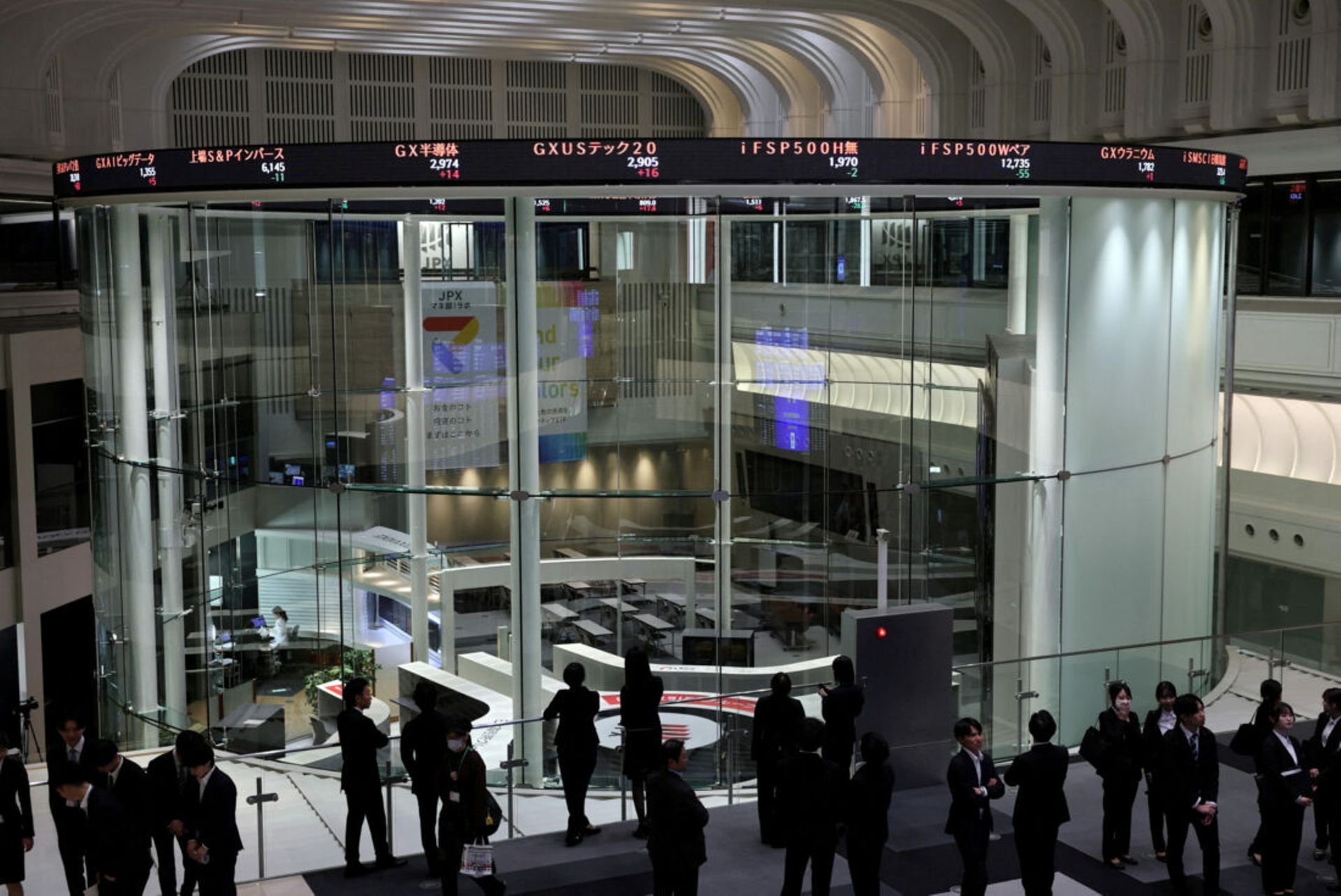
Sparkling debuts on the Tokyo bourse by a sake brewery and pet food maker last week are unlikely to revive a moribund market for new stock listings in Japan as investors remain fixated on the artificial intelligence boom.
Shares of Umenoyado Brewery surged 75% on their first day of trading on Friday, while Inuneko-Seikatsu traded more than 30% higher than its IPO price on Monday.
Even as the Japanese stock market surged to successive record highs this year, initial public offerings have disappointed, with new listings largely trading below their debut price.
Reforms pushed by the Tokyo Stock Exchange (TSE) have helped valuations jump for the overall market, but stricter listing criteria have put a damper on the IPO sector. At the same time, enthusiasm over the red-hot artificial intelligence sector has sapped interest in IPOs, which are typically small companies that are focused on domestic demand.
“The IPO boom has faded because retail investors’ interest is largely focused on AI stocks. We do not see those stocks among recent new listings,” said Shigetoshi Kamada, an adviser of the research department at Tachibana Securities.
Before the listing of IT company SystemExe on April 6, all seven IPOs on the TSE this year traded below their debut price. The benchmark Nikkei index climbed to an intraday record on Thursday, and hit a fresh record high on Monday, driven by AI-related shares such as SoftBank Group and Advantest.
The number of IPOs in the Tokyo market will likely slide by about 20% this year from the 65 seen in 2025, said Katsumi Udagawa, manager of research and strategy at Ichiyoshi Securities.
“Retail investors typically buy IPO stocks to get gains in the short term,” Udagawa said. “But the rallies of large technology stocks were so sharp, they chose the high-flying stocks for short-term gains.”
DELISTING THREAT
Recent listings benefited from both novelty and timing. Sake made by Umenoyado, founded in 1893 and based in the home prefecture of Japanese Prime Minister Sanae Takaichi, was served at lunch between the Japanese premier and U.S. President Donald Trump in October.
Inuneko, which means “dog-cat” in Japanese, makes domestically produced pet food and supplements. It is backed by Yusuke Maezawa, the founder of online retailer Zozotown who spent 12 days on the International Space Station in December 2021 and paid to be on a SpaceX flyby of the moon that was later scrubbed.
“The robust performance of Umenoyado and Inuneko-Seikatsu came after the Nikkei hit its new peak. Investors thought the index’s rally would pause for a while and shifted their focus to them,” said Udagawa.
The TSE’s stricter listing regulations have put a damper on IPOs, analysts said. The exchange said last year that from 2030, companies on its growth-oriented market will need to achieve a market value of 10 billion yen ($62.74 million).
“Even as companies go public now, they may be delisted after 2030,” said Kazuaki Shimada, chief strategist at IwaiCosmo Securities.
Reuters