Foreign banks are seeking a bigger foothold in Vietnam by extending hard-currency loans to local lenders squeezed between rising domestic funding costs and government pressure to expand credit to meet ambitious economic growth targets, bankers and analysts said.
The growing reliance on offshore funding highlights a central challenge for Communist Party chief To Lam’s economic agenda, with banks expected to bankroll most of the planned infrastructure projects worth about $200 billion and support annual growth of at least 10% through 2030 despite mounting funding strains.
Chinese, Taiwanese and Middle Eastern banks are among those said to have shown interest as Vietnamese lenders seek offshore funding, said Willie Tanoto of Fitch Ratings, noting the size of discussed syndicated deals has reportedly been around several hundred million dollars.
Several foreign banks operate in Vietnam through branches, and more could enter under the government’s plan to establish international financial centres, analysts said, though key details remain unclear.
Japanese and South Korean banks are already strategic investors in some of the country’s largest lenders.
Last month, HDBank, a mid-sized private bank linked to budget carrier VietJet, said it had secured an international syndicated loan agreement worth $721 million, exceeding the initial fundraising target by approximately 60%.
Lenders included Standard Chartered, Germany’s Commerzbank and Japan’s MUFG Bank.
That followed a $1.44 billion offshore loan signed in June by VPBank, one of Vietnam’s largest private banks, with Japan’s Sumitomo Mitsui playing a key role in the deal.
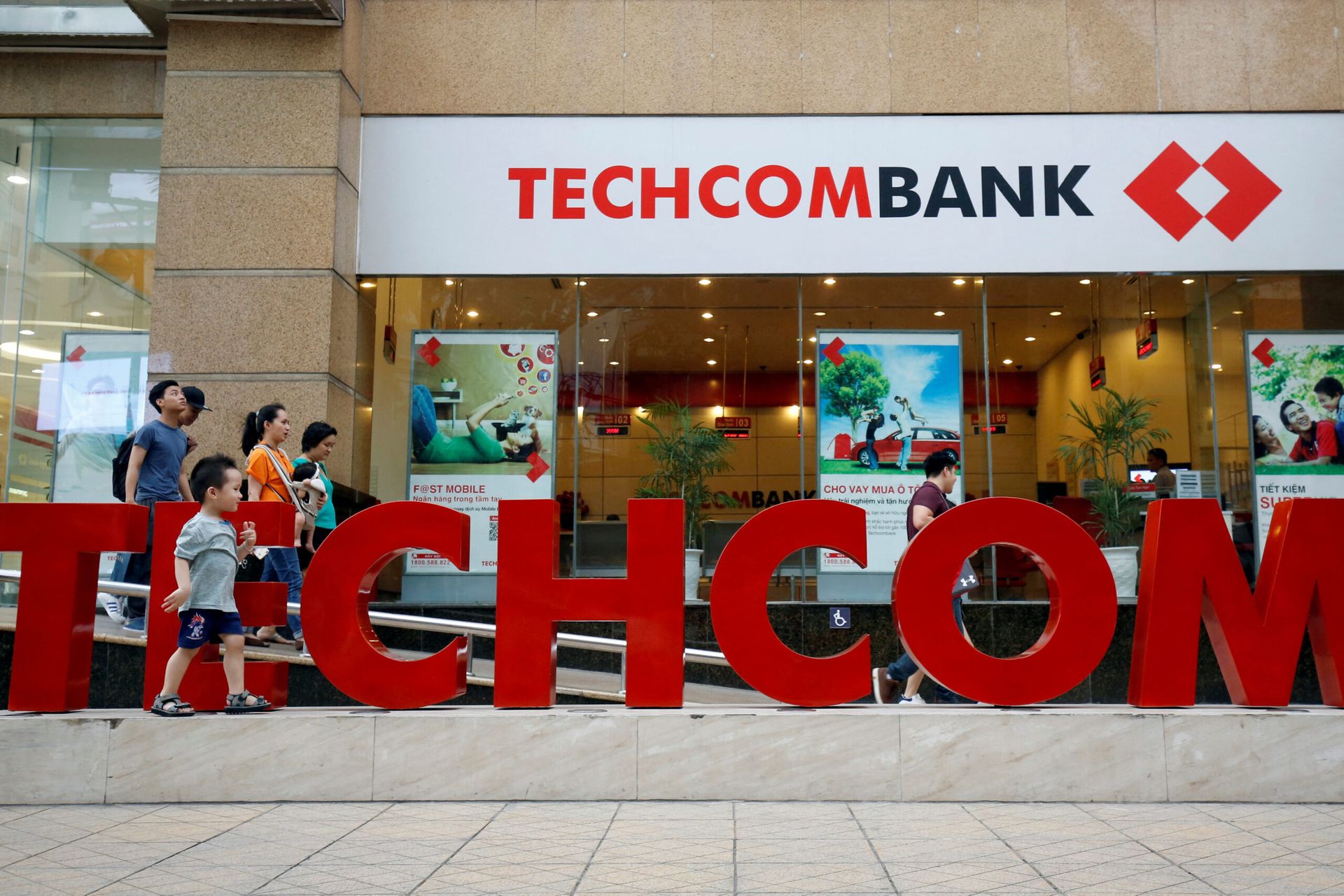
Techcombank, another top private bank, is also seeking a foreign loan of $1 billion pending regulatory approval, its CEO Jens Lottner told Reuters, confirming an earlier Bloomberg report.
“As domestic interest rates are rising, this becomes economically sensible again for medium to long term funding,” he said, noting the bank raised a similar amount overseas in 2022 and routinely taps international markets when conditions are favourable, including currently, with dollar funding relatively cheap.
“I think there is appetite for Vietnam,” Lottner said.
Interest rates on long-term deposits in Vietnam rose in June to a range of 5.9%-7.8% from 4.8%-7.1% a year earlier, according to the central bank, amid high inflation.
Offshore loans to Vietnamese banks often carry interest below those paid on domestic deposits, one consultant at a Vietnam-based securities firm said, declining to be named because the information was not public.
Offshore borrowing appears to be increasing, but many of the transactions are bilateral, making it difficult to estimate the total amount raised, Tanoto said.
RISKS
The drive to tap offshore funding is being fuelled by Vietnam’s ambitious growth agenda, analysts and bankers said.
At the start of the year, the central bank lowered the banking system’s credit-growth target to 15% from 20% in 2025, after a lending boom stoked concerns over asset bubbles.
In Communist-ruled Vietnam, the central bank assigns annual credit-growth quotas to individual lenders.
Yet by the end of June, credit growth had exceeded 18% year-on-year. Large infrastructure projects, including a railway being developed by conglomerate Vingroup, are exempt from those limits.
As banks struggle to bridge the gap between short-term funding and the long-dated financing needs of infrastructure projects, the central bank in July relaxed prudential rules.
Yet, deposits remain increasingly difficult to attract, pushing funding costs higher.
Deposit growth accelerated in the second quarter, but the loan-to-deposit ratio remained elevated at 102.4%, according to brokerage SSI. At the same time, the central bank has revised the way it calculates the ratio, effectively giving banks greater room to extend credit.
“While banks diversifying their funding sources is not a bad thing, especially if they are disciplined enough to stagger maturities and hedge their FX exposures, it does not resolve the deposit shortage in the domestic system,” Tanoto of Fitch said, warning of growing risks from Vietnam’s excessive reliance on banks to finance rising investment needs.
Reuters