At a time when venture fundraising remains difficult and institutional capital is concentrating around fewer managers, Dubai Future District Fund (DFDF) is moving in a different direction.
The Dubai government-backed investment platform is now committing to roughly one to two fund managers a month, across both global and local funds. Unlike a traditional LP that may build deeper relationships with a relatively small group of managers, DFDF sees value in having a wider network.
“For us, there is value in width,” Nader Albastaki, Managing Director of Dubai Future District Fund, told DealStreetAsia in an interview. “An early-stage manager can become a pipeline for a later-stage manager. A later-stage investor can bring knowledge, geographic access or follow-on capital,” Albastaki said.
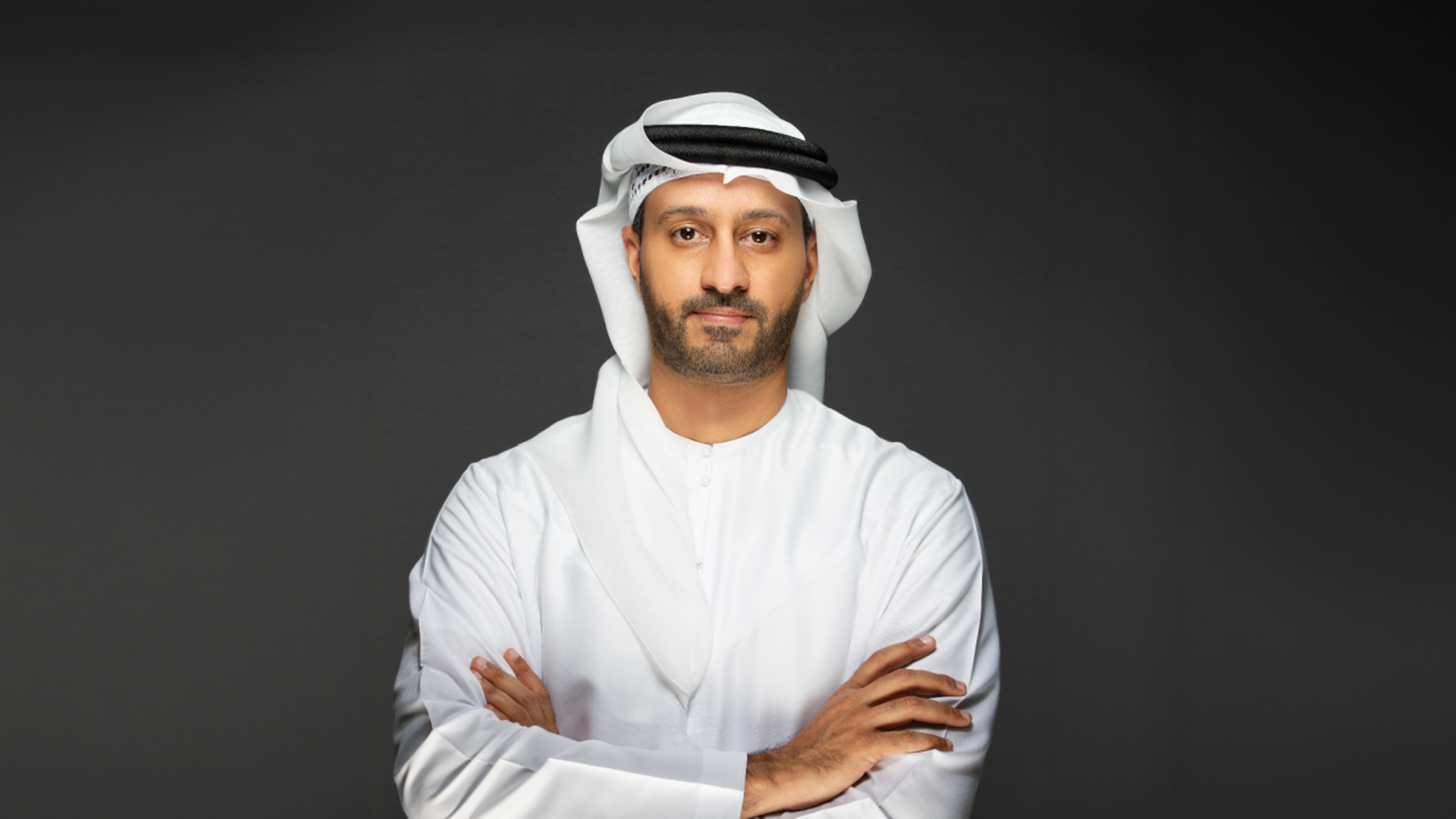
Nader Albastaki, Managing Director, Dubai Future District Fund, will be joining the panel session – Can LPs back Asia’s next generation of managers in a consolidating market? – at the upcoming Asia PE-VC Summit 2026
DFDF increasingly sees itself as a ‘matchmaker between GPs’, with managers expected to create value for one another and for the broader Dubai ecosystem.
At the same time, he emphasised that this did not imply that strategic fit replaces financial discipline.
“It is our first filter,” he said. The question is whether a manager has people, investments, or portfolio companies in the market, or companies with a genuine reason to expand into Dubai.
“Once that box is ticked, we assess them like any institutional LP would – track record, propensity to generate returns, performance against peers through good and bad cycles, and ability to create exits.”
“We don’t pay a strategic premium,” explained the Managing Director of Dubai Future District Fund
That distinction also shapes the managers DFDF wants to work with.
For a very large global fund with little exposure to Dubai, DFDF may not be meaningful enough to create much mutual value.
Albastaki said the fund would rather back a strong manager for whom Dubai could become an important part of the strategy. “We don’t want to write a cheque and then have the manager disappear,” he said. “We don’t want our only relationship to be with IR.”
The same thinking applies even to oversubscribed funds. Albastaki said DFDF was speaking to managers raising very large pools of capital that still saw value in bringing a strategic LP into the fund.
“Money itself is abundant for a manager everybody wants to back,” he said. “If you can shorten the time it takes for a portfolio company to secure a major customer or contract in a region, that has real economic value,” he added.
For Asian managers, DFDF is looking for more than access to investments. It wants GPs that understand their markets deeply and can create a bridge between Asia and the Gulf, including around AI, robotics, mobility, logistics, health and life sciences, fintech, and construction technology.
“Can they help us understand what policymakers are thinking? What are the real problems on the ground? Where can our portfolio companies create value there? And, conversely, where can we help their portfolio companies enter this region?”
The investor has backed Leo Capital’s third fund that closed at $125 million in 2024, becoming its first commitment in the region. The commitment will see Leo look at startups targeting the UAE-India corridor. Singapore’s Arbor Ventures is another example of an Asian manager that fits its strategy because of its regional focus and partner presence in the UAE.
DFDF is already significantly engaged in Korea, Albastaki said, while China remains a market it wants to understand much better. The fund is also reserving capital for emerging managers at a time when much of the institutional market is concentrating around established franchises.
For Albastaki, however, the investment case ultimately comes back to the same question. DFDF has a broader mandate to contribute to Dubai’s innovation ecosystem, but it is still investing government capital.
“We have a double bottom line,” he said, while adding: “But ultimately the government has entrusted us with capital, and one of the fundamental questions will be – did you grow it?”
Yes. The first half of this year was a record period for us, and we are pacing at roughly one to two managers a month across global and local managers. Our 2025 annual report showed 11 fund managers and 19 startups in the portfolio. There is always a lag between a commitment and when it becomes public. With a startup, it might be weeks or months. With a fund, it can be much longer. You may commit before a first close, and the manager might not announce anything until the fund closes. We have spent time building the infrastructure, capacity, and pipeline. What you are seeing now is the execution.
Most institutional LPs tend to build deep relationships with a relatively small group of managers. Your model seems almost the opposite. Why?
A traditional LP may have a small number of managers, build very deep relationships and write larger cheques. We see value in having a wider network because those managers can create value for one another. An early-stage manager can become a pipeline for a later-stage manager. A later-stage investor can bring knowledge, geographic access, or follow-on capital. We increasingly see ourselves as a matchmaker between GPs. Our commitment also signals that a manager has passed our institutional diligence and has a genuine reason to engage with this region. It creates more work for us, but we think the network effect is a big part of the model.
Does that mean DFDF is less interested in the very large blue-chip global managers?
The first question is whether Dubai matters to them. If a very large manager has less than 1% of its exposure here, we may not be meaningful enough to its story to create much mutual value. Compare that with a smaller, strong-performing manager for whom Dubai can become an important part of the strategy. We can unlock much more together. We don’t want to write a cheque and then have the manager disappear. We don’t want our only relationship to be with IR. We want managers with a vested interest in doing business here: bringing portfolio companies into the region, helping companies from here internationalise, sharing expertise and participating in the ecosystem. Whether somebody is considered ‘blue chip’ isn’t really the point. For us, tier one means a high propensity to generate returns.
You have also carved out an allocation for emerging managers at a time when institutional capital is concentrating around established names. How do you underwrite a first- or second-time fund?
There are several types of emerging managers. One could be a senior investor from a major platform who ran an entire vertical and then left to start a fund. Their individual track record can often be traced and validated. Another might have been on the cusp of becoming a senior partner but had a different view of how to build a fund. The risk is higher, including whether they can raise capital, but you can still assess their investing history. Then there are operator-led managers. They may have helped scale some of the world’s biggest technology companies. Perhaps their biggest strength isn’t picking companies at seed, but they know how to take a business from one to ten. Or it could be a founder who has built several companies and developed a repeatable playbook for expansion. Each profile brings different risks. The question is: what differentiated value are they bringing, and does it fill a gap in the market? We look at it holistically.
Fundraising remains exceptionally difficult across venture capital. Are even the managers you back struggling to close funds?
Fundraising is primarily a function of the manager – profile, track record, and differentiation. A good manager should be able to raise in good times and bad. We have managers returning with second vintages and others preparing third vintages. We are also seeing first- and second-time managers close funds when they have the right profiles. When the macro environment gets harder, the differences become more pronounced. The managers that suffer are generally those without a differentiated story or a track record strong enough to convince investors. A difficult macro environment exposes that much more clearly.
DFDF has both a financial and a broader mandate to contribute to Dubai’s innovation ecosystem. How do you balance the two when they point in different directions?
Strategic fit decides what we look at. It doesn’t decide what we approve. It is our first filter. Is the manager participating in this market? Do they have people, investments, or portfolio companies here? Do their companies have a genuine reason to expand into Dubai? Once that box is ticked, we assess them like any institutional LP would – track record, propensity to generate returns, performance against peers through good and bad cycles, and ability to create exits. We don’t pay a strategic premium. We have a double bottom line, but ultimately the government has entrusted us with capital, and one of the fundamental questions will be: did you grow it?
One concern across venture right now is that AI has become so capital-intensive that much of it barely looks like traditional VC anymore. Where can smaller venture funds realistically play?
If you’re investing in frontier models, or at the intersection of hardware and AI, enormous amounts of capital may be required just to get off the ground. Those aren’t necessarily the areas where we can add the most value. We are more interested in AI applications with a clear use case in this market. The fundamental question is, where is the customer? Infrastructure without domestic application is an expensive way to become somebody else’s customer. The UAE has invested heavily in AI infrastructure. But if an AI company is solving a problem for customers that exist here, we can potentially connect that company to customers and create revenue opportunities. If the customer set isn’t clear, then you have to ask: why here?
So when you evaluate an AI-focused GP, you are also looking through the portfolio and asking whether those companies can actually do business in the UAE?
Absolutely. Our diligence isn’t purely about the manager’s track record. We also look at the underlying assets because we are an active LP. We want to understand where we can add value. To some extent, we are underwriting our own ability to unlock value for the portfolio. With AI, that means looking for applications where there is a real problem statement here and where we can create commercial connections. Revenue is one of the biggest drivers of a company’s intent to participate in a market. That is much more compelling than simply saying the UAE has a lot of AI infrastructure; therefore, every AI company should come here.
But the most sought-after managers do not necessarily need another LP. How do you get into funds that are already oversubscribed?
That is where being a strategic LP matters. We are talking to managers raising very large funds, including some that are oversubscribed, but they still see value in having us participate. Money itself is abundant for a manager everybody wants to back. A manager may take slightly less capital from one financial LP to make room for strategic LPs that can create additional value. If you can shorten the time it takes for a portfolio company to secure a major customer or contract in a region, that has real economic value. That’s the role we can play as a strategic Dubai LP. If a manager has no intention of doing anything in Dubai, we are probably not particularly valuable to them. But where there is genuine interest in the market, we have found managers willing to make room for us even in heavily oversubscribed funds.
DFDF invests in funds but also directly into companies. What does a GP give you that a direct investment doesn’t?
They give us different things. A specialist manager can become a knowledge partner and a reference point when we are diligencing companies in their sector. If we are evaluating a robotics company, for example, a specialist growth investor in robotics can give us expertise and perspective. Managers also give us access to markets, customers and insights on headwinds and tailwinds. And they give us access to portfolio companies. A direct investment is much more one-to-one. We know the company, can identify specific gaps and assess what we can unlock for it. With a fund manager, there are more hypotheticals because we don’t know every future investment. One relationship gives us a broader view of a sector or ecosystem. The other lets us go very deep into a particular company.
How do you source the companies you invest in directly?
Our pipeline comes through our existing fund managers. We don’t want to compete with the GPs we back. If we sourced everything ourselves, we would need scouts, people constantly attending events and a much larger direct-deal infrastructure. Whether we call something a co-investment or a direct investment, the opportunity is generally sourced through one of our GPs. There is natural alignment. We are usually interested because we believe we can add value, so the GP also has an incentive to connect us directly with the company.
How are you thinking about Asia as you build the global GP portfolio? What are you looking for from managers in this part of the world?
We want managers that genuinely understand their markets and can build a bridge between those markets and this region. It is not simply about access to investments. Can they help us understand what policymakers are thinking? What are the real problems on the ground? Where can our portfolio companies create value there? And, conversely, where can we help their portfolio companies enter this region? We are particularly interested in managers with access to innovation around AI and robotics. But we look at those technologies horizontally. The question is how they intersect with sectors where this region has particular relevance: proptech and construction technology, mobility and logistics, health and life sciences, and fintech.
China is still one of the world’s biggest technology and venture markets, but many global investors remain cautious. How do you approach it?
China is a massive market. There is a lot of innovation and a lot of capital. The challenge is that it is very difficult to understand remotely. You can’t sit at your desk, do market research and get everything you need. You have to be there. We want to learn much more about China, but we’re not yet at the level of understanding that would allow us to underwrite the market with greater conviction. Private-market information in particular is not as transparent. For us, the answer is spending more time on the ground.
What about Japan and Korea, where there is significant innovation in semiconductors, robotics and deep tech but the natural expansion market is often the US rather than the Middle East?
Korea is already a market where we have significant engagement. The UAE and Korea also have strong economic links, which creates a foundation for investment and commercial activity. With Japan, Korea, or any other market, the question is where the application ultimately is. For some sectors, the US may naturally be the first market. But if you’re solving problems in mobility, logistics, energy, or other areas where this region has significant demand, the UAE can be a springboard. We’ve seen that particularly with Indian companies. Instead of immediately undertaking an expensive US expansion, a company can use the UAE to test its ability to operate outside its home market, learn how to internationalise and prove the playbook. Once that is established, it can raise the larger amount of capital needed to enter the US.
When you call Dubai a springboard, do you mean it can play a role similar to Singapore in Southeast Asia?
Singapore and Hong Kong are good comparisons because their strength is connectivity. Southeast Asia has different regulations and very different market dynamics. But there is enormous value in being based in Singapore because of its connectivity to all those markets. Dubai has a similar characteristic. The Gulf isn’t one market. There are different countries, central banks, and regulators. But companies have repeatedly created playbooks for expanding from the UAE into Saudi Arabia, Kuwait, Qatar and elsewhere. That precedent matters. People know how to do it. The advisers, talent and relationships exist. That is what creates the springboard effect.
Singapore spent years seeding local and regional fund managers, including first-time funds. Is DFDF trying to do something similar for Dubai?
That is part of what our emerging fund manager allocation is intended to address. We are looking for market gaps. Maybe it is early-stage capital, growth capital, pre-IPO capital, or a sector where there isn’t enough specialist expertise. The first question is whether there is a local manager capable of filling that gap. If there is, and they meet our underwriting requirements, we can back them. If there isn’t, we ask whether a global manager can fill it. Over time, that helps create the ecosystem. You create more companies and more specialised investment expertise. Eventually there may be enough deal flow and talent for locally based specialist GPs to emerge. The objective isn’t simply to import a manager. It is to create the conditions for more managers to eventually emerge from this market.
Dubai is competing for capital and talent with Singapore, Hong Kong, London, New York and other financial centres. How do you assess the competition?
I don’t see it primarily as competition. Look at every major global city – London, New York, Tokyo, Singapore, Hong Kong, Dubai. One thing they all share is that they are extremely globally connected. If Singapore is the key node for Southeast Asia, it is almost a no-brainer for us to want a very strong connection to Singapore. The same applies to other major financial centres. Connectivity makes the whole network stronger. The more connected Dubai becomes to the world’s important hubs, the more important Dubai itself becomes.