S&P Dow Jones Indices warned Indonesia risks a downgrade to frontier from emerging status due to market transparency issues, echoing caution from rival index provider MSCI in the latest setback for the country.
Indonesia has been placed under review by MSCI since January and the risk of a downgrade has tanked an equity market that was once the toast of emerging market fund managers, leaving it down more than 30%, or 35% in dollar terms, for the year so far.
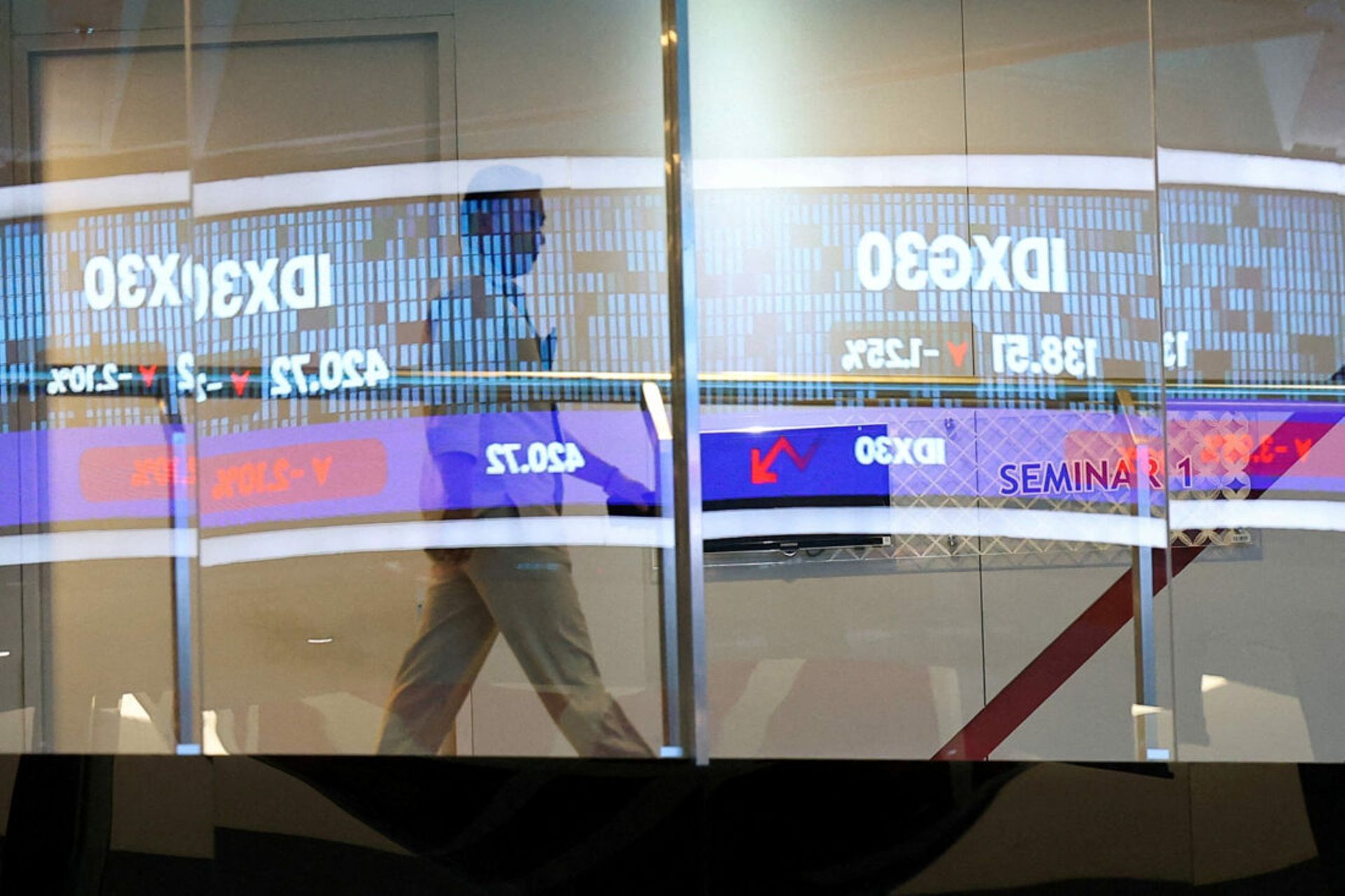
Stocks in Jakarta, the worst-performing major stock market this year, fell 1% amid broader risk-off sentiment on Wednesday.
The warning in January from MSCI spurred a slate of measures from Indonesia, including a policy to double the free float requirement for listed firms from 7.5% to 15%.
S&P DJI said it was continuing to monitor efforts to improve stock ownership transparency, including exchange-led reforms aimed at addressing disclosure concerns and the potential impact on market liquidity.
MSCI last month extended its review of Indonesian equities to November
MSCI last month extended its review of Indonesian equities to November, giving regulators more time to pursue reforms but leaving the threat of a downgrade hanging over a market that narrowly retained its emerging-market status.
“If circumstances worsen, S&P DJI may consider implementing special treatment for Indonesian securities,” it said. “If these matters remain unresolved one calendar year from the date special measures are introduced, Indonesia’s market classification will be assessed at the next annual review.”
Indonesia, along with Turkey, were added to a watchlist for potential inclusion in next year’s market review process, S&P DJI said in a statement late on Tuesday. Nigeria was also on the list for a potential upgrade to frontier from standalone status.
“What investors are looking for now is not more warnings, but evidence that market accessibility, liquidity and governance are improving in practice,” said Mohit Mirpuri, fund manager at SGMC Capital. “There is probably some headline fatigue among investors as well.”
Focus remains on MSCI’s November deadline
Jeffrey Hendrik, the chief executive of Indonesia’s stock exchange (IDX), said the bourse will have constructive discussions with the related S&P Dow Jones Indices to investigate the concerns raised and understand the issues that are of concern in the evaluation process.
“Together with the OJK (Indonesia’s financial regulator) and all stakeholders, the IDX will continue to make various efforts to address existing concerns,” said Hendrik, who took over the exchange last month.
Last month, MSCI described the reforms as a “step in the right direction,” but said the consistent implementation and sustained effects of these measures are needed.
Angus Mackintosh, ASEAN specialist at Aletheia Capital, said the MSCI deadline in November is more important, noting that if Indonesia satisfies MSCI, it would be unlikely that the other index providers would downgrade.
“The IDX and OJK need to address the other outstanding issues to put the whole issue to bed,” Mackintosh said. “A focus on enacting punishment for those responsible for stock manipulation would be a good thing.”
Indonesia has faced a string of setbacks this year, with Moody’s and Fitch lowering their outlooks on the country’s sovereign credit ratings to negative, citing concerns over policy credibility.
Investor jitters over President Prabowo Subianto’s spending plans have added to the pressure, casting a shadow over the investment outlook for the $1.4 trillion economy. Foreign investors have net sold over $4 billion worth of Indonesian stocks this year.
Reuters