Samsung's operating profit jumps 19x in Q2 but shares slump

Samsung's operating profit jumps 19x in Q2 but shares slump

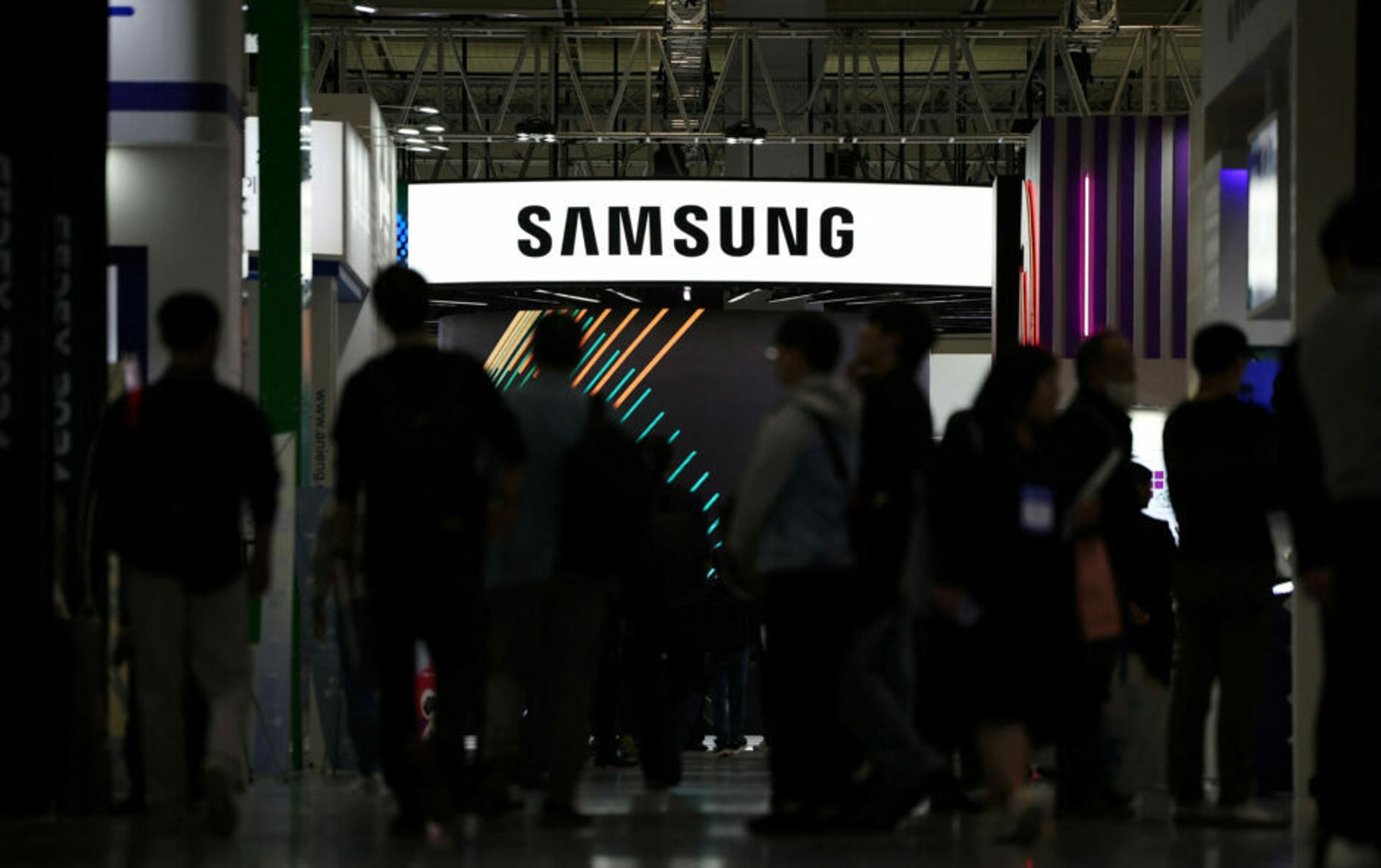
The logo of Samsung Electronics is seen at its booth during The 26th Semiconductor Exhibition 2024 in Seoul, South Korea, October 23, 2024. REUTERS/Kim Hong-Ji

Samsung Electronics on Tuesday flagged a 19-fold jump in second-quarter operating profit, surpassing its combined earnings over the past three years, but investors wiped more than $80 billion off its market value on concerns over how long the AI bonanza will last.

While Samsung has benefited massively from the AI data centre boom that has propelled memory chip prices to record highs, the outlook for chipmakers has been clouded by worries US tech giants may slow their infrastructure plans and curb chip demand.

Samsung estimated April-June operating profit at 89.4 trillion won ($58.44 billion), beating an LSEG SmartEstimate of 87.3 trillion won, according to a regulatory filing. It reported a profit of 4.7 trillion won a year earlier. Revenue would likely rise 129% to 171 trillion won from a year earlier, it said.

The South Korean tech giant’s shares still dropped as much as 10.1% and finished down 6.9%, while rival SK Hynix ended down 6%, dragging the benchmark KOSPI down 4.9%.

Analysts attributed the declines to some lofty market expectations and worries that spending on AI data centres may slow down.

“Samsung’s strong earnings were widely expected and had largely been priced in after its shares rallied ahead of the results,” said Albert Yong, a managing partner at Petra Capital Management, which owns Samsung stock.

“Investors remain concerned about the sustainability of the AI boom and the risk of slower AI infrastructure spending by major U.S. technology firms.”

Slower chip price growth already

Memory chip prices continued to climb during the quarter as AI spending broadened beyond high-bandwidth memory (HBM) into conventional DRAM and NAND products. Citi Research last week said average selling prices for DRAM and NAND rose 44% and 53% quarter-on-quarter, respectively, in the second quarter.

However, Morningstar analyst Jing Jie Yu said Samsung’s revenue estimate was not as strong as expected.

“We believe the slight revenue miss was largely driven by more moderate DRAM price hikes than expected, which likely spooked investors who are increasingly pricing in structural strength in memory prices,” said Yu, an analyst at Morningstar.

Samsung’s profit surged even as it set aside funds for sizeable bonuses to its semiconductor workers, as agreed in a wage deal in May linking their pay to operating profit.

Without those provisions, its operating profit would likely have exceeded 100 trillion won, analysts said.

Analysts said rapid growth in HBM production has tightened supply of conventional memory products used in smartphones, PCs and enterprise servers, further supporting prices.

“We’re confident the earnings are going to come through,” Raisah Rasid, global market strategist at JPMorgan Asset Management in Singapore, said, but added that “we’re going to see a moderation” in returns, with the triple-digit gains of the first half of the year unlikely to be replicated.

While Samsung’s memory business is expected to post another quarter of strong earnings, analysts said losses at its foundry and logic chip (LSI) businesses are likely to widen because bonus expenses are allocated across the semiconductor division.

Samsung plans to announce detailed results on July 30, including a breakdown of earnings of each of its business divisions.

Risks on the horizon

Looking ahead, analysts said the biggest risk to the memory boom would be a slowdown in AI infrastructure investment.

Investors have also raised concern that the big technology companies, such as Meta, Microsoft, Amazon and Alphabet, will need to borrow heavily to fund AI infrastructure with uncertain returns, which could also dampen chip demand.

Morgan Stanley said in a report on Monday that the recent weakness in semiconductor stocks, or “semis” would likely continue, as investors are bracing for “more capex discipline in the near-term” on the part of the hyperscalers.

“The Semis trade finally started to lose momentum after a historic run since the end of March,” the report said.

Samsung Electronics and SK Hynix last week announced one of the biggest bets yet on the AI boom with investments worth hundreds of billions of dollars, but the planned capacity buildout stoked fears of a painful reckoning if AI spending cools.

SK Hynix on Monday launched a U.S. share sale to raise 43 trillion won. The stock will start to trade on Friday, in what will be another test of investor confidence in the sector.

Reuters

Bring stories like this into your inbox every day.

Sign up for our newsletter - The Daily Brief
Subscribe to Newsletter


This is your last free story for the month. Register to continue reading our content