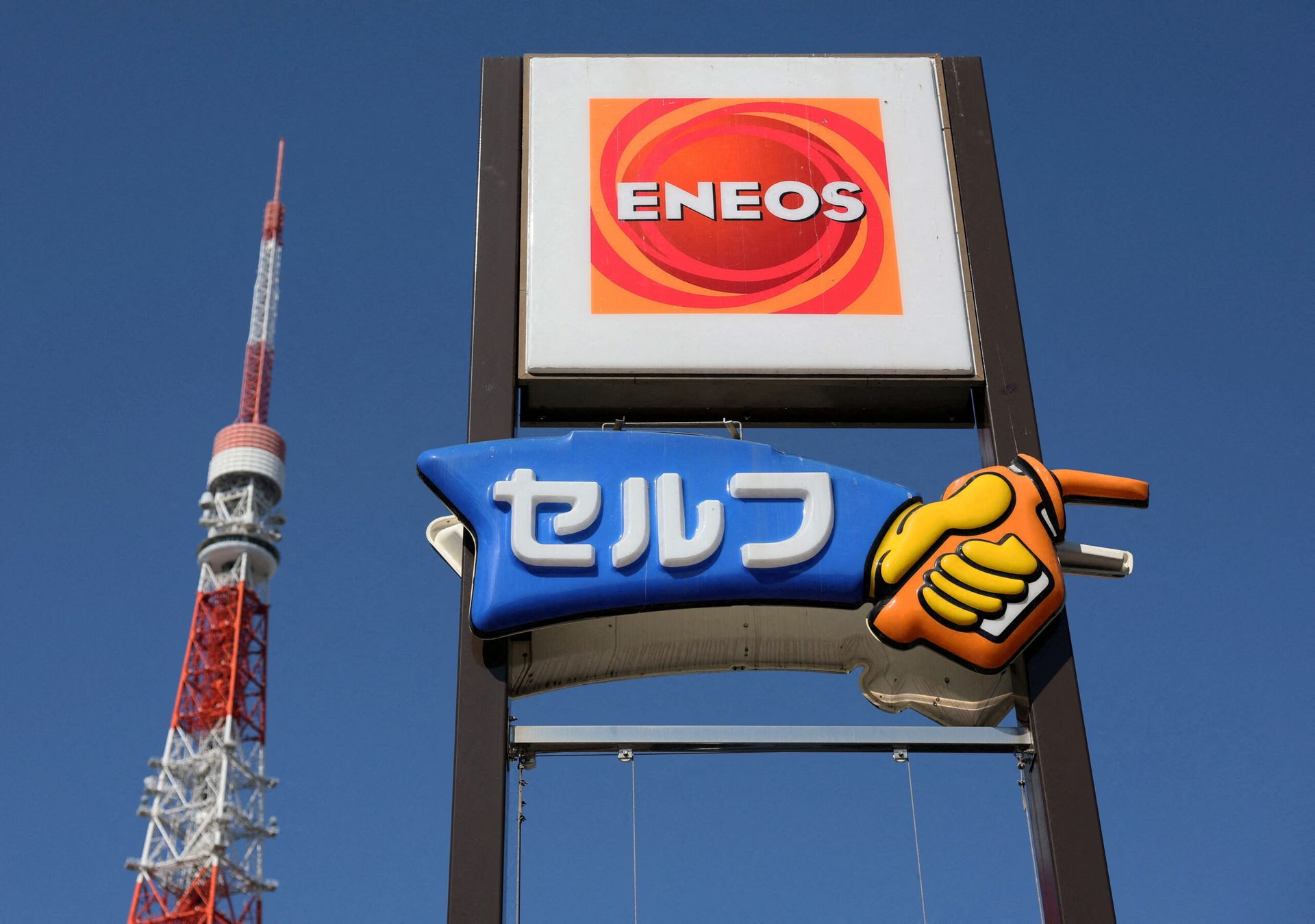
Top Japanese refiner Eneos Holdings, cash-rich and facing declining demand at home, is in the midst of a push to expand its overseas footprint, testing its ability to broaden its revenue sources and manage assets abroad.
Eneos, which dominates Japan’s petrol station space with 11,000 outlets – half the market – is looking at additional deals, betting that diversification in its core fuel business is more successful than its loss-making foray into renewable energy a few years ago.
Its $2 billion-plus purchase of Chevron’s downstream assets in Asia, unveiled in May, includes a 50% stake in Singapore Refining Company, operator of a 290,000 barrel-per-day refinery. The deal is an attempt to capture growth in Southeast Asian and Australian demand and expand its supply, marketing and trading network.
Then in August, Eneos said it would buy U.S. butadiene maker TPC Holdings for about 200 billion yen ($1.25 billion), according to analysts, which will make it the world’s No. 3 producer of a key raw material in synthetic rubber and plastics.
BACK TO BASICS
By expanding its refining, storage and marketing footprint outside Japan, the Chevron deal enables Eneos to boost trading volumes and capture more value from regional fuel flows.
“We haven’t been able to trade at a scale commensurate with our size until now, so this time, with expanded assets, we’re going to make the most of it,” Chief Financial Officer Masahiro Tanaka told Reuters.
Japanese rival Idemitsu Kosan generates significantly greater profits from asset-backed trading, analysts say, even though it is smaller, highlighting an opportunity for Eneos if it can effectively leverage its enlarged portfolio.
In moving beyond Japan, Eneos will face a more competitive and flexible Singapore trading environment, executives at two rivals in the energy hub said. They did not want to be named publicly because they are not authorised to speak to the media.
The deal could help Eneos to diversify its crude purchases, one trader said, as the Singapore refinery uses a wider range of grades than those in Japan. The country’s overwhelming reliance on Middle Eastern oil has exposed it to disruption during the U.S.-Israeli war on Iran.
Under the Chevron deal, which several sources say is expected to close in the second quarter of 2027, Eneos is buying the U.S. major’s downstream fuels and lubricants businesses in Singapore, Malaysia, the Philippines, Vietnam and Indonesia under the Caltex brand – as well as in Australia. It is targeting about $250 million in operating profit from the new assets by fiscal 2030.
Eneos’ expansion comes as oil companies around the world redirect capital towards conventional energy after prioritising decarbonisation investments, even as they shed refining assets. Chevron’s sale of its Singapore refinery stake follows Shell’s sale last year of its Bukom refinery in the city-state.
In 2022, Eneos spent 200 billion yen acquiring Japan Renewable Energy, but its renewables segment has not been profitable over the past two years.
Meanwhile, traditionally low-margin refining has been made much more profitable by disruptions caused by the war in the Middle East as well as Ukraine’s retaliatory attacks on Russian energy infrastructure.
“The ultimate verdict will depend on execution and whether the company can successfully build global capabilities and capture the expected trading and operational synergies,” said Jefferies equity analyst Thanh Ha Pham.
MORE ACQUISITIONS LIKELY
Last month, Tanaka said Eneos still has about 300 billion yen earmarked for investment under its three-year plan through March 2028. But he said that could increase after last year’s initial public offering of JX Advanced Metals and Eneos’ subsequent sale of additional shares, which generated about 640 billion yen in proceeds.
“As we now have considerably more financial leeway … there is a possibility that the budget will increase,” he said.
The Chevron deal will nearly double the overseas share of Eneos’ revenue to 30% from 16%. As the company aims to raise that figure to 50% by 2030, the Chevron deal is unlikely to be Eneos’ last major overseas investment.
Eneos has identified gas development as a pillar of its medium-term strategy, and Tanaka said upstream natural gas projects in Southeast Asia remain potential investment targets, while expansion of its petroleum and other businesses in the region is also possible.
In April, Eneos said it would buy a 10% stake in Petronas’ Malaysia LNG Tiga.
“Further M&A will probably be the primary growth driver,” Tanaka said.
($1 = 159.7900 yen)
Reuters