DealStreetAsia Leadership Roundtable: The coming of age of India’s PE market

DealStreetAsia Leadership Roundtable: The coming of age of India’s PE market

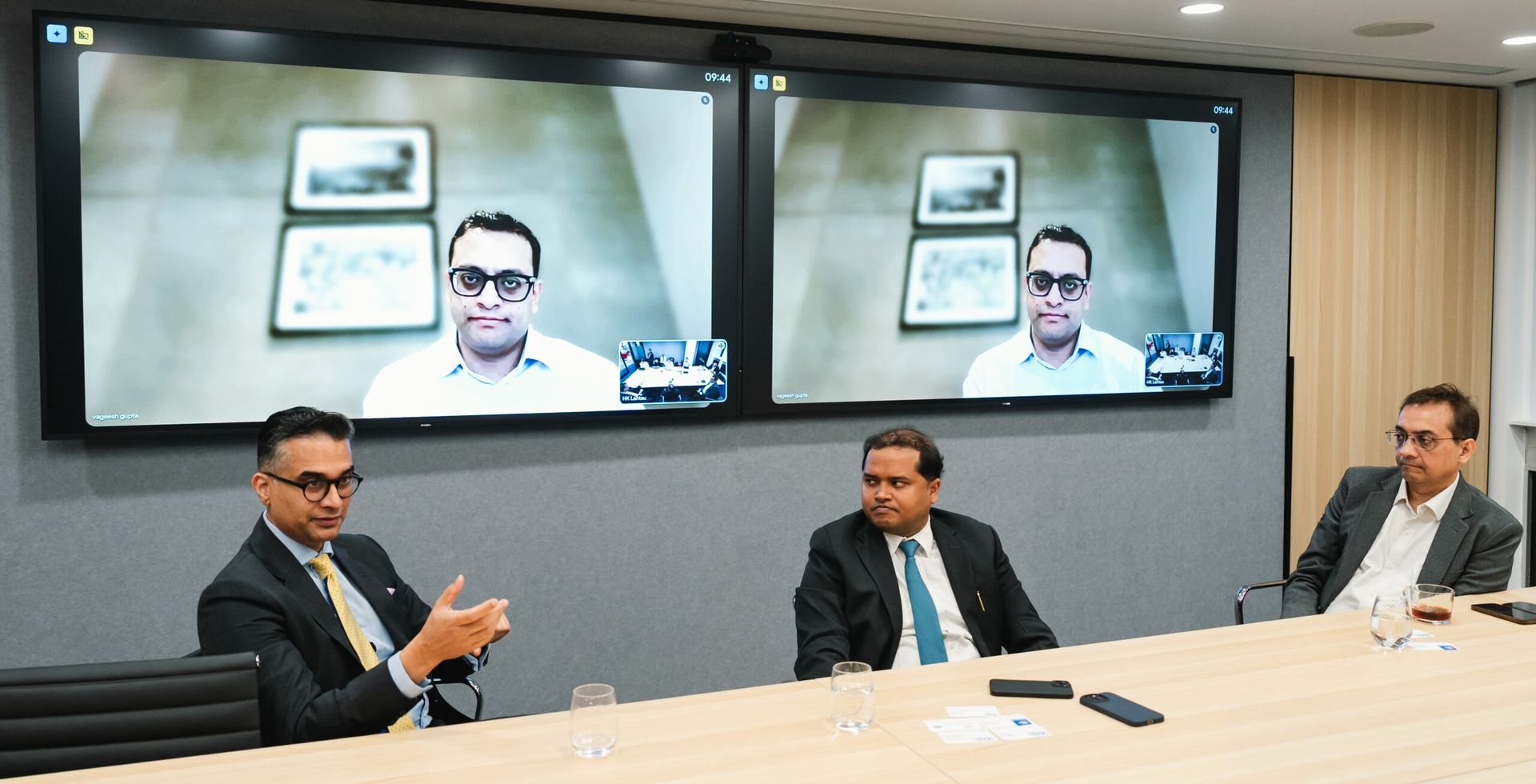
Top: Vageesh Gupta, Managing Director, Partners Group Bottom (L to R): Tarun Sharma, Senior Fund Manager and Strategy Head, Healthcare and Consumer, 360 ONE Asset; Kapil Modi, Partner, Carlyle India; Nilesh Shrivastava, Partner, Strategic Opportunities Fund, NIIF

For years, the India private equity story was easy to tell: A large economy, a young population, rising consumption, deep public markets, entrepreneurs building across sectors and, more recently, a region where global investors could still find growth at scale when large parts of Asia looked harder to underwrite.

While these facts remain valid, they are no longer the most interesting part of the story.

The more consequential shift is that India is past the point where global LPs need to be persuaded. That argument has largely been won. The real question now is more demanding. How much capital should India get? Which managers can justify the mandate? Where can it be deployed sensibly? And, most importantly, how much of it can be returned in cash?

DealStreetAsia’s Leadership Roundtable: India Series, held in Hong Kong with senior executives from Carlyle, Partners Group, the National Investment and Infrastructure Fund, and 360 ONE Asset, explored these pressing questions defining the region’s PE landscape. It was not a conversation about whether India is a market of the moment. It was about what happens after a market becomes one as maturity brings its own pressure.

As Vageesh Gupta, Managing Director, Partners Group, put it, “It is certainly not a binary question anymore — do I want to be in India or not? It is already beyond that. It is about how much allocation I want to give to India — the form and shape of that allocation, the size of that allocation.”

Kapil Modi, Partner, Carlyle India, reinforced the point from a firm-level perspective. India has been one of Carlyle’s best-performing private equity markets globally over the last decade and accounted for the largest geographic investment in its previous pan-Asia fund vintage on an ex-Japan basis. “It is not a sideshow anymore — it is a sizeable amount of deployment,” he said.

For Tarun Sharma, Senior Fund Manager and Strategy Head, Healthcare and Consumer, 360 ONE Asset, the shift is equally visible through his investor base. “I don’t think people question the India story; they are only figuring out the right way to play it. Most folks start with listed market exposure, build their comfort around it, and then gradually move into private markets. The good part is that now you have so many managers with extensive track record across both distribution and investment.”

The clearest area of agreement is the mid-market — broadly, businesses with enterprise values between $150 million and $1.5 billion. This is where fund managers see the most opportunity, the greatest scope to add genuine operational value, and the most meaningful differentiation between managers.

The broadening of India’s domestic investor base is structurally the most significant development in the private equity ecosystem. Nilesh Shrivastava, Partner, Strategic Opportunities Fund, National Investment and Infrastructure Fund (NIIF), offered the most tangible marker of change in LP behaviour.

“The simplest example I have is that some of the large LPs in our first funds had no India presence at all, so they partnered with us. Today they all have offices in India and still want to engage. Not only have the amounts and cheque sizes grown, but the level of engagement has gone up significantly. That does not happen unless this is structurally an important market for them.”

The allocation question for India is settled — the obligation to keep earning it remains.

As Gupta noted: “Now it is on all investors in the industry to make sure we consistently create those returns — go for long-term, high-quality businesses that are being built, and follow that virtuous cycle over and over again to make sure that those allocation percentages increase over a period of time”.

For deeper insights, download the full PDF of the DealStreetAsia Leadership Roundtable: India Series.


Edited by: Padma Priya

Bring stories like this into your inbox every day.

Sign up for our newsletter - The Daily Brief
Subscribe to Newsletter


This is your last free story for the month. Register to continue reading our content