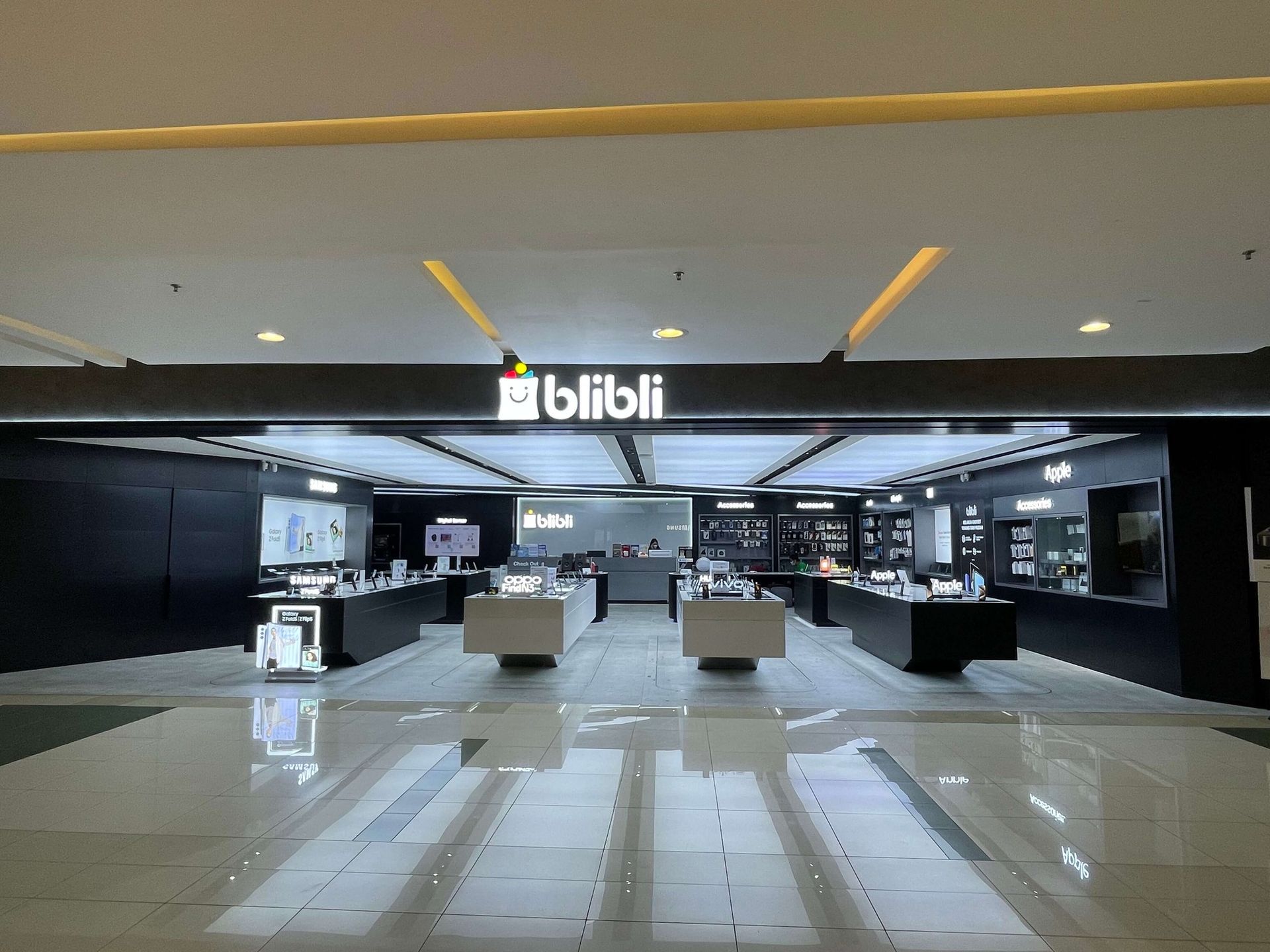
PT Global Digital Niaga Tbk, the Indonesia-listed retail and e-commerce group that owns Blibli, Tiket.com, Ranch Market, and Dekoruma, reported a sharp increase in revenue in the first quarter of 2026, supported by strong growth in its institutional and physical retail segments, while losses narrowed on improved cost discipline.
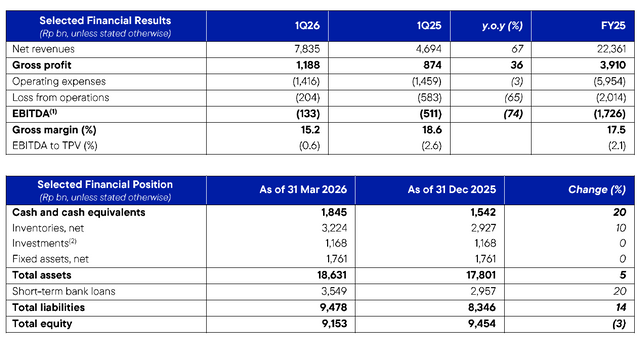
Net revenue rose 67% year-on-year to 7.8 trillion rupiah ($448 million) in the January-March period, from 4.7 trillion rupiah ($270 million) a year earlier, according to the company’s earnings release filed with the Indonesia Stock Exchange.
Total processing value (TPV), a proxy for gross merchandise value, rose a more modest 10% to 22 trillion rupiah, suggesting that revenue growth was driven more by improved monetisation than transaction volume.
“We began the year 2026 with solid momentum, extending the positive trajectory from the previous quarter,” CEO and co-founder Kusumo Martanto said in a statement, adding that the results reflect “continued execution of our strategy, delivering strong double-digit topline growth alongside further expansion in take rate and overall margins”.
The growth was largely driven by its institutions segment, where net revenue surged 137% year-on-year to 3.55 trillion rupiah ($203.8 million), accounting for 45.3% of total net revenue. The growth was attributed to improved client quality, with spending per institutional client rising 125% to 112 million rupiah, while TPV rose 77% to 4.9 trillion rupiah.
Blibli’s Q1 2026 financial performance
The physical stores segment was the second-largest, posting a 60% increase in sales. During the period, Blibli added 35 new outlets, expanding its offline footprint through electronics stores and trade-in programmes while also introducing lifestyle-focused formats such as BlibliStyle outlets.
As of March, the company operated 295 consumer electronics stores—comprising 151 monobrand outlets for brands such as Apple, Samsung, and Huawei, and 144 multibrand stores—along with nine home appliance stores under Blibli Elektronik and one fashion and sports store under BlibliStyle. It also managed 58 premium supermarket outlets operated by Ranch Market.
In contrast, its third-party (3P) marketplace business, which includes its OTA Tiket.com, grew at a slower pace of 9% to 384 million rupiah, making it the weakest-performing segment during the quarter and underscoring uneven performance across Blibli’s portfolio.
The company attributed the muted performance to “uncertainties due to the global macro environment,” which weighed on growth in its online travel and marketplace-related businesses.
Blibli also continued to narrow its losses, with operating loss shrinking to 204 billion rupiah from 583 billion rupiah in the same period last year. Net loss declined to 302 billion rupiah, from 642 billion rupiah previously.
The improvement was supported by tighter cost control, with total operating expenses declining slightly to 1.4 trillion rupiah from 1.46 trillion rupiah a year earlier, even as revenue expanded significantly.
Selling expenses rose to 534 billion rupiah from 506 billion rupiah, reflecting higher marketing and sales activity, while general and administrative expenses fell to 882 billion rupiah from 953 billion rupiah, indicating improved efficiency.
Chief financial officer Ronald Winardi said the company saw “strong revenue acceleration alongside continued progress in operating discipline and profitability”, noting that tighter cost control led to a “significant narrowing of operating losses” and improved EBITDA performance.
Blibli’s EBITDA margin improved to -0.6% of TPV, from -2.6% a year earlier, as operating expenses as a percentage of TPV fell to 6.4% from 7.3%.
Martanto said performance across segments remained “well-balanced,” with the company continuing to scale its omnichannel strategy while improving profitability.
On the balance sheet, Blibli continued to invest in growth, with inventory rising to 3.2 trillion rupiah and short-term bank loans increasing to 3.5 trillion rupiah as of March.
Operating cash flow remained negative at 108 billion rupiah, although this marked a significant improvement from 2.1 trillion rupiah in outflows a year earlier.
The company said it remains on track to deliver its 2026 guidance of achieving a 15-20% increase in consolidated net revenue, as it focuses on scaling its omnichannel capabilities and improving profitability.