Partner content in association with
SE Asia buy-and-build playbook: Unlocking value in a fragmented region


The best-laid plans for regional expansion could get a rude reality check within Southeast Asia, given the diverse jurisdictions and vast variance in regulatory frameworks. Experts from across the region detail the hidden operational risks and strict statutory requirements that can make or break a cross-border platform.
Creating a pan-regional entity in Southeast Asia can be challenging. Several markets in the region are grappling with the contradictory impulses of encouraging foreign direct investment, even as they enforce regulatory frameworks to safeguard local business interests. At a recent panel discussion, experts representing several key jurisdictions highlighted the pitfalls and workarounds for an effective buy-and-build strategy.
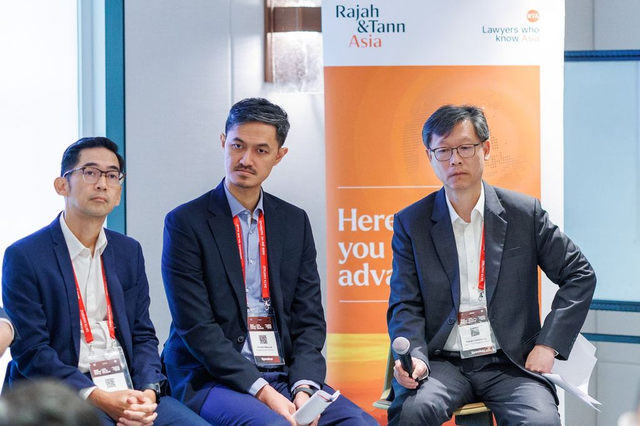
The panel included Dickson Loo, managing director, private equity, SeaTown Holdings International; Goh Jun Yi, partner, capital markets/M&A practice, Rajah & Tann Singapore; Angela Lim, co-head, banking & finance practice, Rajah & Tann Singapore; Adirek Limsiriwong, partner, corporate & commercial practice, Rajah & Tann (Thailand); Adrian Chee, partner, corporate practice, Christopher & Lee Ong; Vincent Wahyudi, partner, corporate & M&A practice, Assegaf Hamzah & Partners. The discussion was moderated by Terence Quek, deputy head, M&A practice, Rajah & Tann Singapore.
Edited excerpts from the discussion:-
From an investor’s perspective, what makes a business viable for a regional buy-and-build strategy?
Dickson Loo (DL): At SeaTown, our private equity strategy is focused on buy-and-build investments. Over the last three and a half years, we have completed about 65 acquisitions across seven platforms.
This experience has helped us develop an in-house screening process to identify suitable companies or sectors. The first dimension is whether a market is ripe for consolidation, based on depth, fragmentation, regulatory frameworks, and licensing requirements.
The second dimension is whether the acquisition makes sense for the company. After comparing bolt-on acquisitions with organic growth, we assess whether creating a larger platform delivers tangible value. Regardless of whether we pursue a standalone or buy-and-build strategy, each acquisition must be attractive on its own merits. We do not use synergies to justify the purchase price or the investment; we treat them as potential upside.
How much of the eventual regional expansion strategy is mapped out from the beginning?
DL: A buy-and-build investment strategy works best when the destination is clear. However, investors ought to be flexible about the route. This clarity guides resource allocation, giving the team a common hunting ground rather than sending them in every direction. Aligning stakeholders such as the management team, CEO, shareholders and partners around what success looks like ensures that everybody moves in the same direction.
The end goal shapes the exit strategy. The sequence of investment depends on multiple factors, including valuation, brand quality and market conditions. In short, investors need a clear vision and broad roadmap with flexibility to respond to the market.
Is it possible to distinguish buy-and-build opportunities in Southeast Asia from those that are available in more developed markets?
DL: Southeast Asia offers a tremendous investment opportunity and is relatively attractive from a growth standpoint. With 70 million SMEs and about half of the region’s GDP, many verticals are ripe for consolidation. This creates opportunities not just for investment but for managers like us to add value by enhancing governance and introducing institutional processes.
Obviously, it’s not a homogeneous region. The economies are at different stages of development. The markets have distinct regulations, licensing requirements, business practices, and talent. Local knowledge and teams are critical in shaping platform design. Compared to developed markets, our approach may have to be different, whether it’s structuring or financing. Regional expansion does not necessarily mean entering every single market; we must be selective about the ones that make sense to us.
Moving on to financing acquisitions, what sort of options are typically available to sponsors as the platform expands?
Angela Lim (AL): It really depends on the fund and strategy. SeaTown recently acquired AddVita, a healthcare and life sciences platform based in Singapore with a strategy to expand across ASEAN. SeaTown has a huge war chest, so I understand most of the financing is done via equity funding.
On the other hand, KKR agreed to acquire Singapore’s XCL Education Holdings, which already has 12 campuses in the region, including Bangkok and Vietnam. The $1.3-billion acquisition was financed using a combination of equity and private debt. KKR’s other platforms in the sector include Vinschool in Vietnam and Taylor’s Education in Malaysia.
How do sponsors think about acquisition debt, equity, and reinvestment as the strategy develops?
AL: The structuring must account for laws of diverse jurisdictions. Debt is usually raised according to jurisdiction, through bank loans. We also see a lot of private credit and even family offices in Singapore entering the space.
The first debt facility usually has restrictive terms including financial covenants, permitted acquisition baskets, and limits on granting further security which may restrict the ability of the platform to grow through additional debt.
The ability of the acquiring company to raise further debt also depends on industry. For asset-light targets such as education, healthcare, or distribution services, the value is premised on goodwill and recurring revenue. Financing is based on cash flow rather than hard assets. Banks may impose different terms and offer less leverage than expected.
To overcome these restrictions, some funds may structure acquisitions via various operating companies (opcos) and holding companies (hold cos). Each structure is subject to its own terms and conditions for financing, thereby protecting the structure if an add-on company performs below expectations and fails to meet its covenant. Once the operations have stabilised, some companies consolidate to achieve synergies and economies of scale.
Alternatively, companies that anticipate further acquisitions may build headroom into the initial financing documents to support that growth.
However, restrictions placed on acquiring additional debt may limit growth using that formula. Banks financing acquisitions will also require security. If an add-on acquisition requires further financing, the original lenders will seek security sharing arrangements with subsequent lenders.
Are there any recent examples of these curveballs across various jurisdictions?
AL: Singapore is probably the friendliest jurisdiction for taking on debt and obtaining security. There are no restrictions on giving loans to corporates or accredited investors and no restrictions on financial assistance for acquiring a target. Stamp duty is capped at $500; a reasonable amount relative to the value of a loan. Singapore also has no exchange control restrictions, and an efficient legal system making enforcement straightforward.
Malaysia is slightly more complicated because lenders require a license unless the transaction can be structured appropriately. Giving financial assistance is also restricted unless one undertakes white-wash. Once those hurdles are overcome, enforcement is straightforward since Malaysia is a common law jurisdiction. However, stamp duties stand at 5 MYR for every 1000 MYR of the facility, which could become expensive for billion-dollar loans.
Indonesia is relatively straightforward from a lender’s perspective until enforcement is required.
Lending to Indonesian companies is not restricted; there is no prohibition on financial assistance or guarantees, and a target may provide security for a share acquisition if it can demonstrate corporate benefit.
Enforcement is complicated for foreign lenders. For instance, they cannot acquire freehold land and may instead need a forced sale to a party eligible to own such land. We recommend public auctions over private sales since the latter involve greater uncertainty.
Security over movable assets is more complicated because enforcement of fiduciary security is constitutional only if the borrower agrees, which is unlikely. The alternative is obtaining a court decision, declaring a default, and the borrower voluntarily surrendering. The last route, which is time-consuming, is to get the court to agree to let the lender repossess the security. When lending to these jurisdictions, lenders opt for a multilayered structure in which Indonesian assets are owned by an opco in a friendly jurisdiction. This allows enforcement at an offshore opco level, helping to speed up the process.
Vietnam is very complicated. Onshore lenders must be locally licensed, while offshore loans are subject to numerous conditions. Most offshore lending uses short-term loans of up to 12 months, including extensions. Loans exceeding 12 months are considered medium- or long-term and can only be used to repay offshore financing or to fund repayables within 12 months. Each company has an annual limit on offshore debt that must be approved by the prime minister. Long-term and medium-term loans also require plans detailing the intended use of proceeds and repayment arrangements.
The repayment schedule has to be approved by authorities and will have to be in accordance with the schedule. The good news is that movable assets may be charged to offshore lenders. However, a guarantee from an onshore borrower for an offshore obligation also requires the approval of the prime minister, making Vietnam complicated.
In Thailand, there are many different types of companies, each with their own set of rules and regulations. We have seen structures in which an offshore entity receives the loan and makes an intercompany loan to the onshore entity, which then grants a mortgage to secure its own borrowing.

Assuming a platform has already been established and financed adequately, and starts acquiring businesses across Southeast Asia, what changes once the strategy crosses borders?
Goh Jun Yi (GJY): Singapore encourages investment. From a buy-and-build strategy perspective, investors may directly invest in a Singapore operating company or, given Southeast Asia’s diversity, use a Singapore-based holding company as a platform for opportunities within (the city-state) and across the region.
Aside from the Significant Investments Review Act, which covers very few companies and typically not those involved in buy-and-build, sector-specific regulations usually apply. In industries including telecom or healthcare, approval from a relevant ministry is required. The focus tends to be on investment rather than on local or foreign ownership.
Regulators consider capability, plans, and statutory requirements, including base capital. Singapore presents no exchange control issues for the flow of currency and no specific requirements about overseas investments. Instead, investors using Singapore as a platform often focus on regulations in local jurisdictions, whether it is Thailand, Indonesia, or Malaysia.
Adrian Chee (AC): The social element of the economy makes Malaysia unique. There are several opportunities for foreign investors, and it is always looking for growth. But it is impossible to disassociate political issues of the day and the government from the market. The Malaysian economy is very dependent on the government being supportive of plans. There have been several high-profile transactions over the last two years which were not popular with the broader community and could potentially become a political hot potato.
While looking to deploy into Malaysia, on paper things could look like it’s all systems go. But investors need to check the temperature on the ground and speak to local advisors who can offer insight as to the potential impact further down the road. To an external observer, Malaysia is interesting, but it can be very stressful for those working on deals that depend either on a regulator or an institutional partner.
Vincent Wahyudi (VW): When foreign investors intend to enter and establish a presence in Indonesia, the primary consideration is whether foreign ownership restrictions apply to the target’s business activity. Nominee arrangements are strictly prohibited under Indonesian law. If foreign shareholding is capped, investors may need to find a local partner for a joint venture. Investors must also identify sector-specific requirements that apply alongside national requirements.
And yet, the intention in Indonesia is to become more open to foreign investment, even if shareholding remains capped in certain sectors. A decade ago, these restrictions were set out in the negative investment list. But now it has been replaced by the priority or positive investment list. The government even offers tax benefits for certain activities.
Adirek Limsiriwong (ADL): Thailand generally limits foreigners to minority shareholding. A foreign majority-owned company is categorised as alien. There are restrictions around the business it may conduct, except manufacturing, where 100% foreign ownership is permitted.
Other businesses are controlled by the Foreign Business Act, which divides them into three categories: impossible; difficult to get into; and finally a category that includes all kinds of services.
For trading, a foreign company must have at least 100 million baht for retail and an equal amount for wholesale, making the fully paid-up capital 200 million baht.
General services require a foreign business license, which is not guaranteed and depends on factors including employment creation and knowledge transfer.
Foreign investors can, however, obtain support from the Board of Investment (BOI), which provides tax and non-tax benefits. Examples of the former include exemptions for eight years, duty-free imports of machinery and raw materials, etc. The non-tax incentives include permission to own land, which is normally prohibited for a foreign company.
A foreign business license is still required, but it is guaranteed with BOI approval. Another option exists but only for partnerships between Americans and Thais. A Thai company majority-owned by American individuals or companies may apply for a Treaty of Amity certificate and then for a foreign business licence, which is likewise guaranteed.