Partner content in association with
Navigating friction and finding opportunity in APAC private markets


David Anderson, Executive Vice President, APAC, Vistra Fund Solutions; Milena Nikolova, Partner, Antares Ventures; Surbhi Khandelwal, Investment Director, Triple P Capital; Davian Sim, Partner, August Global Partners; Andi Haswidi, Head of Data Research, DealStreetAsia (Moderator).
As high interest rates reshape the APAC investment landscape, fund managers are prioritising rapid exits, profitability, and defensive moats to secure capital
Against a backdrop of tighter liquidity and persistent high interest rates, APAC fund managers are reassessing deployment strategies, liquidity solutions and portfolio value creation.
Even as traditional pooled pan-Asia funds continue to have their role, managers are focusing to a far greater extent on investment vehicles and co-investments that target specific sectors and jurisdictions.
More than an overarching vision for growth, on ground delivery is a key priority. The transition has been described as moving from “McKinsey to McDonald’s” and is characterised by a relentless focus on capital discipline, milestone-driven funding, and granular operational execution.
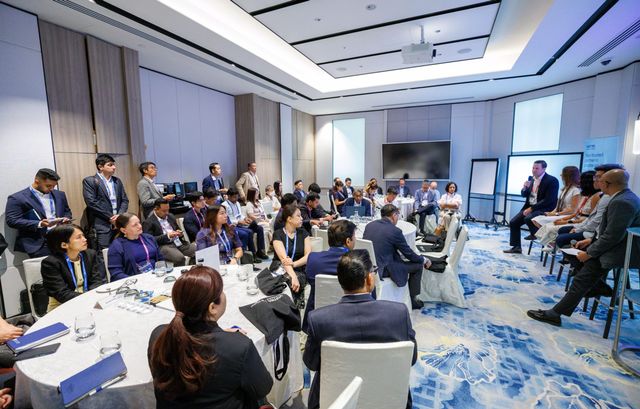
These approaches were discussed at a recent panel discussion organised by DealStreetAsia and Vistra Fund Solutions. The panel also focused on the pivot towards profitability, building businesses with domestic relevance, and upping the ante on deep tech investments.
The panel included David Anderson, executive vice president, APAC, Vistra Fund Solutions; Milena Nikolova, partner, Antares Ventures; Surbhi Khandelwal, investment director, Triple P Capital; Davian Sim, partner, August Global Partners, and was moderated by Andi Haswidi, head of data research, DealStreetAsia.
Read on for edited excerpts from the discussion.
With recent interest rate hikes in the US — the first since 2023, and the opportunity for higher returns in select public markets, what must an Asia Pacific growth strategy offer to justify locking up LP capital for seven to 10 years?
Davian Sim (DS): That was one of the key questions we asked ourselves. Investors are committing risk capital for potentially outsized returns. When we spun off the fund in 2023, interest rates were high. But the private equity hurdle rates have remained around 8% whether the yields are at zero or 5%. Today, we are in a high interest rate environment yet again.
Investors want their capital back quickly, so DPI (distributions to paid-in capital) is central to our strategy. We demonstrated this through a continuation fund that generated early returns for investors within the first or second month of our spinout.
The continuation fund went from 0.2 DPI to 0.4 and continued rising. That proved the model and enabled us to raise a second fund. Exit risk is real, especially in this part of the world, which makes delivering actual exits and not just paper returns key to raising capital.

Given the macroeconomic environment, are exits likely to be even more challenging? How is the secondary market responding?
DS: We look for interesting deals in the secondary market when high interest rates and limited liquidity make exits difficult, leaving venture capital funds or earlier-stage investors under pressure. These situations create opportunities for risk-adjusted returns. Exits have always been difficult in Southeast Asia. We structure each investment with the eventual exit in mind.
With the pool of capital willing to underwrite the Asian markets changing, there’s an argument that local LPs will take on a bigger role. Is this what you’re seeing?
Surbhi Khandelwal (SK): We are an impact investment fund, so all our LPs are family offices and DFIs. They have always been very risk sensitive. We don’t see a big change in their approach yet.
In terms of local versus regional, we do see some investors or LPs coming up in the region: institutional investors, but mostly sovereign wealth funds.
There aren’t too many funds that make specialist investments. The gap is particularly evident where we invest: mainly in mid-market and growth stage. Most funds are either interested in writing larger tickets or focus on the early-stage VC. We don’t see as much interest yet in our segment. The mix of local versus global LPs has evolved less than we had hoped, despite the natural interest local investors may have in regional opportunities.

We spoke to Danantara in Indonesia earlier this year, and AI was among their principal focus areas. Is that a theme with sovereign funds?
SK: We hear a lot about funds investing in data centres and other infrastructure related to supporting AI in the region. But again, we invest in financial services, so that’s not an area we typically focus on. We are aware of Danantara and other sovereign wealth funds coming up, but we have so far not seen interest from them when we reach out.
As a deep tech environment focus fund, you expect LPs to be comfortable with a longer development cycle and often follow-on capital requirements. How do you convince the LP to accept that trade-off?
Milena Nikolova (MN): Deep tech solves major technological or scientific challenges in a transformative way. Development may take longer, but once a solution is proven, adoption can accelerate and generate outsized returns.
We are looking for three things: Are you solving a large, urgent problem? Is the solution economically attractive to your target clientele? Finally, can it be commercialised and scaled within the fund’s lifetime?
With AI transforming science, this is the decade of deep tech. Timeframes on research that previously took decades are being compressed. We are scratching the surface. While some deep tech projects still need patient capital and sizable capex, others can progress faster and with reduced capital intensity.
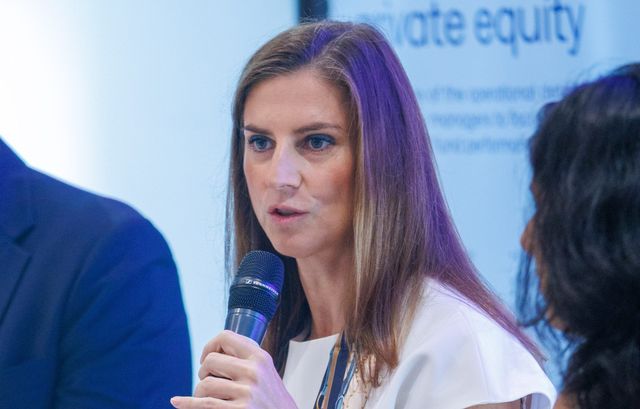
In Southeast Asia, the largest funding rounds are cornered by data centres: for instance, the $4.5 billion investment in DayOne this year, and a $1.3 billion investment in Princeton Digital Group late last year. AI investments in the region are rising even as overall deal volume declines. Is AI overcrowding the market?
MN: More capital is going to fewer deals. In deep tech, we invest across Singapore, Japan, India, Korea, and Australia, where we see scientific breakthroughs, rather than limiting ourselves to Southeast Asian countries. In the AI ecosystem, we also look at adjacent areas such as energy, water, and data centre efficiency, which benefit from the same tailwinds.
As a deep tech fund, is it better to have wider market coverage?
MN: We start with broad theses, narrow them down to pain points, and search globally for the best solutions. Being Asia-biased, we prefer to invest here, with over 50% of our fund to be deployed in the region. However, the strongest candidate is not always here. Deep tech funding in Asia remains limited. We are trying to fill a gap, while recognising that the rising tide of deep tech would benefit from substantially more capital.
Given Vistra’s visibility into how LPs translate their appetite into fund investment, are you seeing greater demand for co-investment, separate vehicles, or more transparency and greater flexibility in terms of how capital is being committed?
David Anderson (DA): Across APAC, managers are increasingly reviewing fund structuring models to balance investor transparency, operational efficiency and regulatory requirements. We are seeing growing interest in jurisdiction-specific vehicles combined with regional operating models. On the transparency front, governance is important, but LPs increasingly want a deeper view of their portfolios including individual assets and their performance. That information always mattered but reporting has traditionally focused on underlying assets rather than structuring.
While pooled pan-Asia structures remain relevant, we are seeing growing demand for more targeted investment strategies. LPs are increasingly focused on specific sectors, markets and asset exposures, often complementing commitments to flagship funds with co-investment opportunities.

Southeast Asia-focused vehicles are finding it difficult to raise funds, with some not completing their final close. Do LPs prefer diversification rather than being focused on a particular market?
DA: From what we are seeing, India continues to perform very well. Singapore continues to be a leading fund structuring hub in Southeast Asia, supported by its established professional services ecosystem, strong governance framework and sophisticated regulatory infrastructure. Many fund managers establish GP, LP or VCC structures in Singapore, while using jurisdiction-specific investment vehicles to support deployment across regional markets.
In this environment, can you still underwrite capital intensive growth? Has the bar shifted towards businesses that can reach self-sufficiency?
DS: Capital-intensive growth is only justified if each dollar deployed builds better defensive moats and barriers to entry. Continuing to burn money without a path to self-sufficiency makes it very difficult to seek a liquidity event. One of our key theses is, therefore, path to profitability.
Ultimately, everything I’ve said is underpinned by execution.
I like to quip that it’s moving from McKinsey to McDonald’s. You can draft the best strategy with top-tier consultants. But how do you go from that to McDonald’s: ensuring that the operations are well-oiled, that burgers fly off the shelves, right down to the smallest aspects like standardising the colour of wrapping paper. Beyond deploying capital, you have to underwrite a team’s execution capabilities.
It even shapes the term sheet. If we identify gaps early on and realise there are specific KPIs that need to be met, we will set that out. We provide some capital upfront, but to raise successive rounds, they must hit milestones, get regulatory approval or prove that they can expand efficiently.
Some people can tell you a great story about big contracts coming in. But if it does not materialise, we need to decouple. The last thing we want to do is throw good money after bad.
Fintech remains the largest sector in Southeast Asia when it comes to funding. Does that apply to your firm as well?
SK: Irrespective of the environment, the fundamentals and core values we assess remain the same. An attractive entry price helps protect returns from macroeconomic shocks.
We focus specifically on insurance while also investing in other financial services. During due diligence, we look for local distribution partnerships and a strong management team with a good track record. While open to smaller stakes, we prefer control transactions where we can influence the direction of the business. These key metrics remain relevant in today’s market.
Southeast Asia’s export-oriented economies have been impacted by the macroeconomic environment, but they are pivoting towards new partners. The region still benefits from favourable demographics and considerable room for productivity gains. Because the impact of digitalisation is not as pervasive as it has been elsewhere, the gap presents a great opportunity. For each transaction, we ensure there are KPIs and a value creation plan and goals covering the first 100 days, first year and the following three years.
Smaller companies probably need more hands-on expertise than larger businesses with greater experience and skills. We account for these differences while evaluating a transaction. The environment may affect entry prices and the negotiations, but our investment criteria remains unchanged. Because we operate in the mid-market, we target companies that have moved past cash burn, are generating profits, and then help them scale into the top five in their markets.
How has capital scarcity affected deployment this year? What does the next year hold?
MN: Capital constraints, especially in Asia for deep tech, are top of mind. We invest or underwrite, expecting the next round will be more difficult.
We look for opportunities along the path of planned capex flows. Reindustrialisation and infrastructure spending on data centres will run into many trillions. If we can solve a problem tied to this expenditure that’s already been committed, funding for our startups is more likely and commercialisation a lot faster.
Some technologies like fusion energy may take longer. But we also explore startups in areas such as laser technology for instance where the milestones can be monetised much faster. Another important leg of our strategy is assessing which solutions can be retrofitted into existing infrastructure.
Lastly, our fund has strong connections with corporates in Asia. Matchmaking is not easy but the background of my partner and founder, Antares Ventures’ Michael Grisels helps. As McKinsey’s tech and innovation lead, he had 500 people advising some of Asia’s largest companies on innovation and digital venture building. Those trusted relationships were built over decades, and our advisory board has similar connections. Some of these corporates are our LPs because they want to access innovation and trust us to bring them relevant opportunities.
What are the industrial sectors that you are looking at in Southeast Asia or Asia in general right now?
MN: Agricultural conglomerates are looking at monetising agri-waste. We also consider energy solutions: transformer companies, wastewater treatment, data centre infrastructure and building materials. We believe each dollar deployed should build a better world.
How are tighter development conditions changing the way funds invest across APAC? Are you seeing more jurisdiction-specific vehicles?
DA: Across APAC, India has performed well, continuing to execute even through COVID-19 when other markets were contracting and deals were paused. India’s GIFT City is an emerging fund structuring jurisdiction worth watching. While international investor familiarity and confidence will continue to develop as the ecosystem matures, we are beginning to see clients explore its potential as part of their regional investment strategies.
There is strong capital flow between Japan and Singapore. Japan has performed well, supported by geopolitical and macroeconomic tailwinds, especially in real assets. Australia too has done well over the past couple of years, with a strong domestic fund focus. While overall deal activity in China remains below historical levels, we are seeing renewed interest in RMB-denominated fund structures. This is reflected in growing demand for end-to-end fund administration, investor servicing, reporting and governance support as managers seek scalable operating models across multiple jurisdictions.
Where are the opportunities in APAC and how do you see them playing out next year?
DA: We don’t anticipate major shifts next year. Investment sectors will change, driven by agentic solutions. Geographically, I expect more of the same from a structuring perspective. Singapore remains an established fund structuring hub, while Hong Kong continues to enhance its competitiveness through developments in its tax and regulatory framework. We are seeing increased interest in Hong Kong management company structures as fund managers evaluate their regional operating models.
There have been changes to the visa regime in the US; for instance, a wage weighted H1B system. Is this likely to impact the talent pool in the region?
DA: We have seen that happening. The talent pools in Japan and Korea have been tight for years, but are beginning to open, as people who have worked for a couple of years in the US return home.
MN: We haven’t analysed that specific point, and do not have direct evidence. But deep tech in India is in a very exciting space: underinvested, with relatively little capital chasing a rapidly growing pool of talent and innovation. Scientific talent from the country used to target the US as a definition of success. But they are now starting to build in India for India, at a scale that can be exported to other developing markets, including Southeast Asia.
Obviously, investors want to focus on where the big opportunities are, but will you be investing in frontier markets such as Cambodia or Myanmar?
SK: Crisis and opportunity go together. Our core mission is to promote financial inclusion and climate adaptation. There is growing awareness of how insurance can help economies prepare for climate change, particularly in Asia, where data shows that losses from natural disasters are largely uninsured. We will continue to invest in the region because the fundamentals are strong. The secular slowdown will eventually resolve.
Within the region, Cambodia is a frontier market, and harder to invest in because there are fewer opportunities and less market depth. However, in Vietnam or the Philippines we can pursue mid-market opportunities. Many businesses across the region are still family owned. There is scope for private investors as the families shift focus to core interests and divest from insurance and other financial services. We are between funds and not actively deploying but are still in conversations with many companies for Fund II.
I’m sure you are working on deployment scenarios for 2027. With just a few months left, what metrics are helping you make those decisions?
DS: I would say exits again. Beyond that, we invest in companies with strong barriers to entry. One of our investee companies moved into medical device manufacturing, and we underwrote that strategy. They have executed well and now serve a global medtech customer base. Building a defensive moat and executing strategy are very important.
Despite the noise around tariffs, it is essential to remain focused on the domestic market. Companies should be able to survive selling products and services to domestic customers and not bank on the outcome of tariff wars. Finally, cheaper is always great, but creating a good product is better.
Charting the course for 2027
As managers model their deployment scenarios for 2027, the playbook for APAC private markets must rely heavily on pragmatism.
Whether backing capital-intensive deep tech or mid-market financial services, the underlying mandate is protecting returns through disciplined entry pricing, mandating strict value-creation plans for the first 100 days, and a sharp focus on domestic relevance, rather than banking on the outcomes of global tariff wars.
While artificial intelligence and associated infrastructure including data centres command an outsized share of funding, the sector presents a unique opportunity to back businesses that can seamlessly plug into trillions of dollars in investment. Ultimately, identifying transformative solutions is only part of the story. The funds that succeed will require hands-on expertise to decouple early from underperformers and scale the winners efficiently.
Although sector preferences will continue to evolve, fund managers across APAC are increasingly seeking structures that provide flexibility, transparency, and operational scalability. As investors become more selective in deploying capital, the ability to combine deep local execution with regional reach will remain a critical differentiator for both fund managers and their portfolio companies.
If you’re interested in fund structuring, administration, or investment solutions across Asia and beyond, connect with Vistra to explore how they can support your growth ambition at https://hubs.li/Q04DRhXq0.